
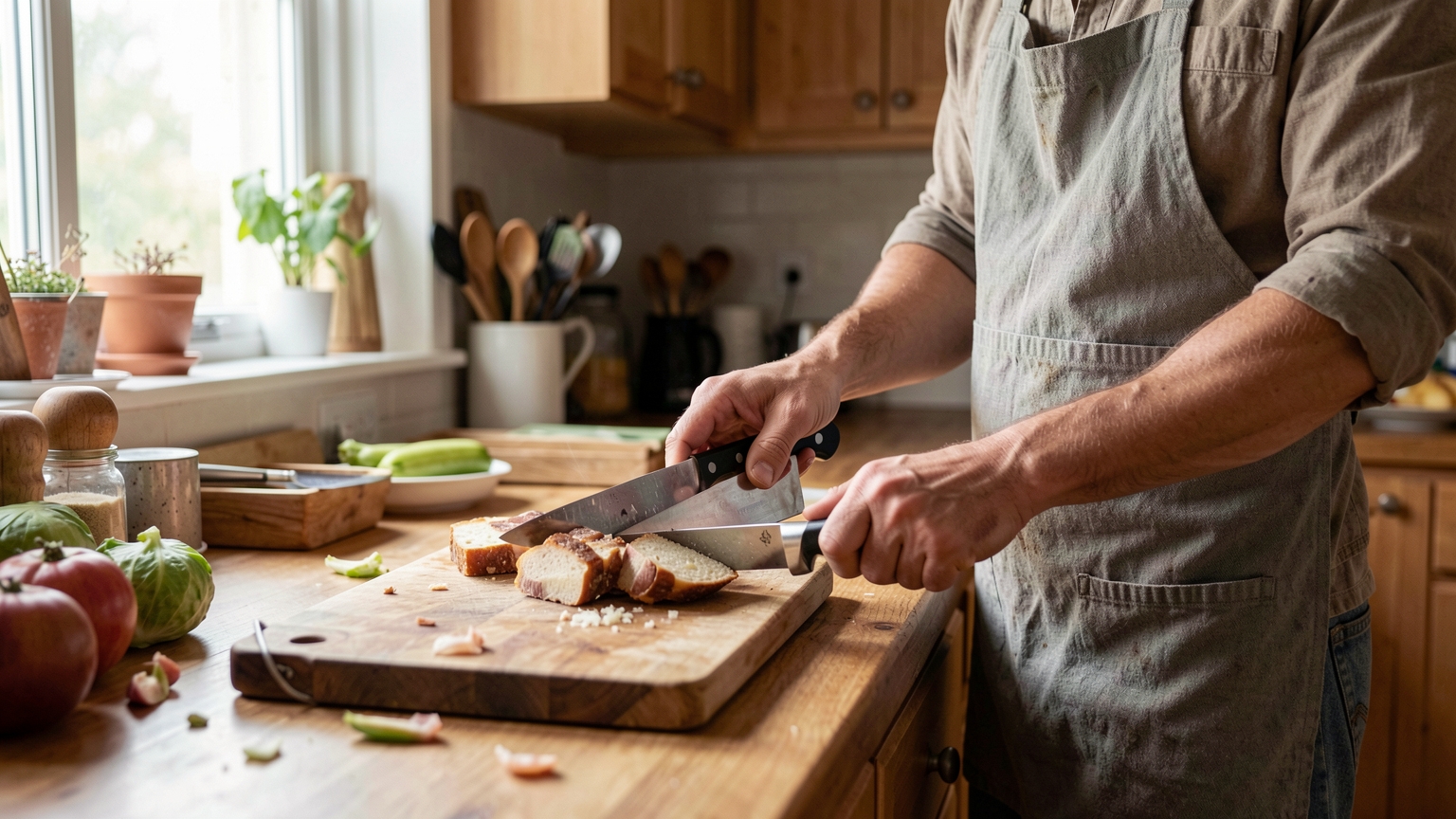
Sharp knives make cooking calmer. You slice tomatoes without squashing them, chop herbs without bruising them, and feel safer because you are not forcing the blade. The problem is that most home cooks never learn how to sharpen. The result is a cycle of dull knives, extra pressure, and frustration. The good news is that sharpening at home is absolutely doable when you understand a few simple principles.
This guide is a practical, kitchen-friendly approach. You do not need a workshop or expensive machinery. You just need a clear process, a decent stone, and a few habits that protect the edge you worked hard to build.
What sharpening really is
Sharpening is the act of removing metal to create a new, crisp edge. Honing, by contrast, is the act of realigning that edge after normal use. A sharp knife has a thin, clean apex. Over time that apex bends, chips, or rounds off. Sharpening recreates it, while honing keeps it in line between sharpening sessions.
When you sharpen, you are grinding the bevel at a consistent angle. If the angle wobbles, the edge will be uneven. If you grind too much, you shorten the life of the knife. The goal is steady, moderate pressure and consistency.
Choose the right stone grit
For most home knives, a medium stone around 1000 grit is the ideal starting point. It is coarse enough to cut a new edge but fine enough to avoid deep scratches. If a knife is very dull or has small chips, a coarse stone around 400 to 600 grit helps you reset faster. For finishing, a fine stone in the 3000 to 6000 range polishes the edge and makes slicing smoother.
If you only buy one stone, pick a 1000 grit. If you want a two-stone setup, pair a 1000 with a 4000 or 6000. That combo handles almost every home kitchen knife.
Set up a safe sharpening station
Sharpening is easiest when the stone is stable. Place a damp towel or a silicone mat under the stone to prevent slipping. Keep a bowl of water nearby if your stone is a water stone. Soak the stone as the manufacturer recommends. Avoid oil unless the stone is designed for it, because mixing oil with water stones can ruin them.
Clear your counter, remove distractions, and give yourself enough light to see the edge. The safer you feel, the more consistent your motions will be.
Find the right angle without overthinking it
Most Western-style chef's knives use a 15 to 20 degree angle per side. Japanese knives may be slightly thinner. You do not need a protractor. A simple trick is to stack two coins under the spine of the knife; this often gets you close to the right angle. The real secret is consistency. A steady angle, even if it is a bit off, will still create a clean edge.
Start by placing the blade on the stone, set the angle, and lock your wrist. Use your other hand to apply light pressure on the blade. If the angle changes mid-stroke, reset before continuing.
Step-by-step sharpening routine
1. Build a burr on the first side
Place the heel of the blade on the stone and sweep toward the tip. Use moderate pressure, as if you are wiping the blade clean. Repeat until you feel a tiny burr along the opposite side. The burr tells you that you have reached the edge.
2. Repeat on the other side
Flip the knife and repeat the same strokes. Count your strokes if it helps maintain evenness. You want the burr to flip to the first side. That is your sign the second side is done.
3. Lighten up and refine
Once the burr is built, take a few light strokes on each side to reduce it. If you have a finer stone, switch now and repeat with lighter pressure for a polished edge.
4. Rinse and dry
Rinse the blade to remove metal filings, dry it immediately, and store it safely. Clean and dry your stone as well to avoid cracking.
Common sharpening mistakes to avoid
The biggest mistake is using too much force. Heavy pressure creates uneven wear and deep scratches that take longer to remove. Another mistake is changing the angle mid-stroke, which creates a rounded edge that feels sharp but dulls quickly. Finally, do not skip the burr. If you never build one, you have not reached the edge, and the knife will remain dull.
Also, avoid sharpening on glass, marble, or hard ceramic plates. Those surfaces dull the edge quickly. Use a wooden or plastic cutting board instead.
Honing keeps the edge alive
Honing does not replace sharpening, but it stretches the life of your edge. A honing rod realigns tiny bends that happen during daily prep. Use light, controlled strokes, and keep the angle consistent. For most home cooks, a quick honing session once a week is enough to keep the knife feeling sharp.
How to test sharpness safely
Skip the dramatic paper slicing test if it makes you nervous. A safer test is the tomato test: a sharp knife should bite into tomato skin with minimal pressure. You can also try slicing a sheet of printer paper from the edge of a table with slow, controlled motion. If the blade catches or tears, it needs more refinement.
Knife care habits that protect your edge
Even a perfectly sharpened knife can go dull fast if it is treated roughly. Use a wooden or plastic board. Avoid putting knives in the dishwasher. Wash and dry them by hand, and store them on a magnetic strip or in a blade guard. These habits matter more than many people realize.
Stone maintenance and flattening
Water stones wear down as you sharpen. A stone that is dished in the middle will round your edge and make angle control harder. Flattening the stone every few sessions keeps it predictable. A flattening plate or a piece of wet-dry sandpaper on glass works well. Mark the stone with pencil lines, then rub until the lines disappear. This small maintenance step improves every sharpening session that follows.
Steel type changes the feel
Softer Western stainless steels sharpen quickly but lose their edge faster. Harder Japanese steels hold an edge longer but can chip if you twist the blade. If your knife is on the harder side, use a gentler touch and avoid aggressive chopping on bones or frozen foods. Understanding the steel helps you set realistic expectations and prevents frustration.
A quick routine for busy cooks
If you cook often but do not want a long sharpening session, set a five-minute routine. Use a medium stone and do light, consistent strokes on each side until you feel a burr, then finish with very light passes. The key is frequency. A short, regular session keeps your knife sharp without dramatic metal removal.
When to seek professional sharpening
If your knife has deep chips, a bent tip, or you are unsure about the steel type, a professional sharpener can reset it safely. But for regular maintenance, home sharpening is more than enough. In fact, most professionals recommend frequent light sharpening rather than waiting until a knife is painfully dull.
Related articles
- Cast Iron Care: Seasoning, Cleaning, and Everyday Cooking Tricks
- How to Read a Recipe Like a Pro: Timing, Mise en Place, and Heat Cues
FAQ
How often should I sharpen my kitchen knives?
Most home cooks benefit from sharpening every 2 to 4 months and honing weekly. The exact schedule depends on how often you cook and the cutting surfaces you use.
Is a honing rod the same as sharpening?
No. Honing realigns the edge, while sharpening removes metal to create a new edge. Both are useful, but they do different jobs.
What grit stone should I buy first?
A medium stone around 1000 grit is the most versatile starting point. Pair it with a finer stone for polishing if needed.
Conclusion
Sharpening is a skill, not a mystery. With a stable setup, a simple stone, and a consistent angle, you can keep your knives sharp and safe for years. Start slow, focus on steady strokes, and build a routine that fits your cooking rhythm.