
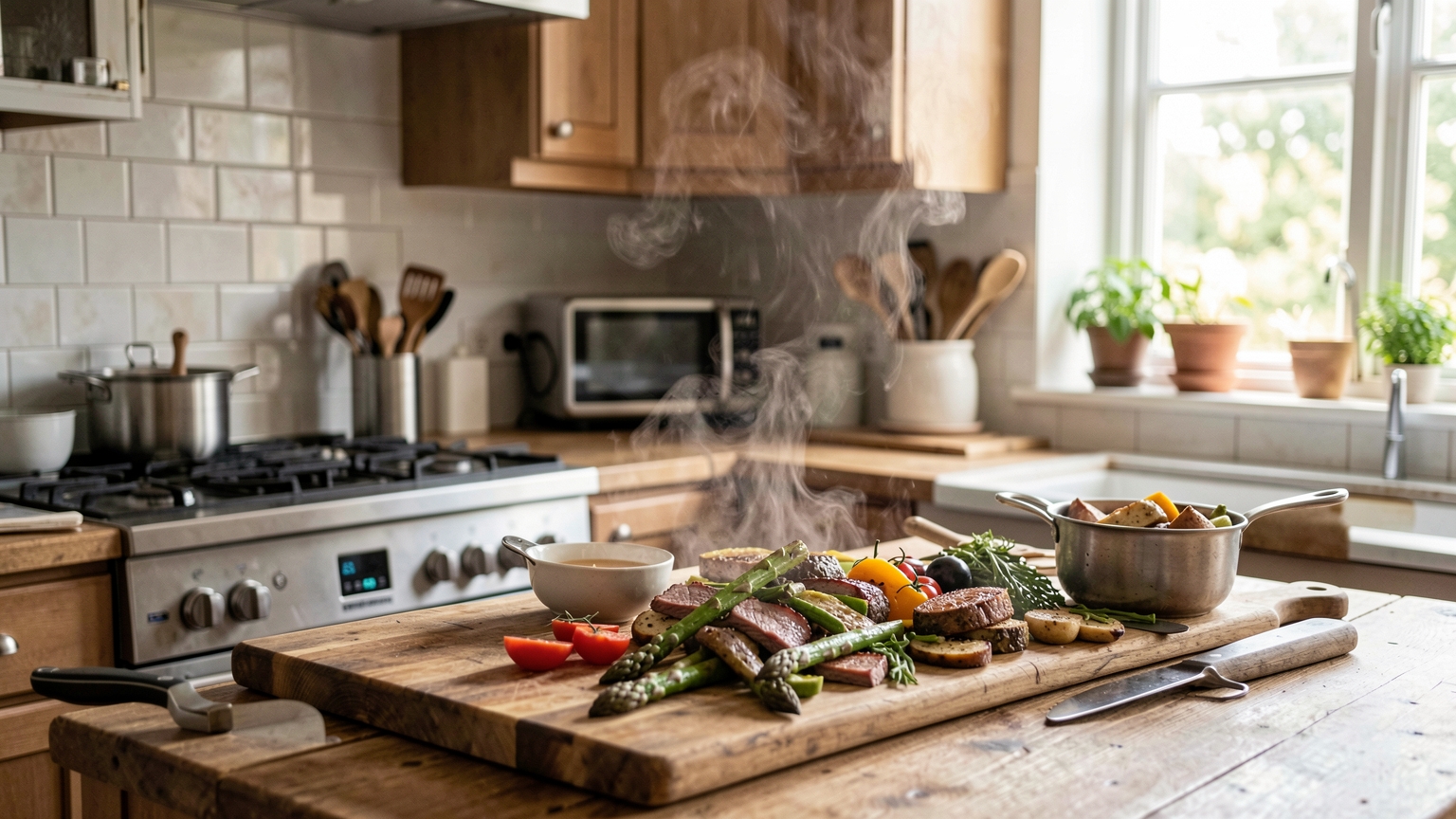
Recipes are more than lists of steps. They are maps, and the best cooks learn how to read between the lines. When you understand timing, heat cues, and ingredient prep, you can adapt any recipe to your kitchen and cook with confidence.
Read the recipe twice
The first read is for the big picture: what tools you need, how long it takes, and any steps that must happen in advance. The second read is for details. This simple habit prevents surprises halfway through cooking.
Create a quick timing plan
Before you start, jot down a rough timeline. If the recipe says the onions need 10 minutes and the sauce simmers for 20, you can stack tasks during that simmering window. This keeps you organized and helps you avoid rushing.
Mise en place saves your focus
Mise en place means gathering and prepping ingredients before you start cooking. It is not about fancy bowls; it is about timing. When your onions are chopped and your spices are measured, you can focus on heat and texture instead of scrambling to catch up.
Make a prep list
Write a quick list of prep tasks: chop onions, mince garlic, measure spices, preheat the oven. This keeps your hands moving in one direction and prevents the back-and-forth that slows cooking down. A two-minute prep list often saves ten minutes later.
Timing is a guideline, not a law
Cooking times vary based on pan size, stove power, and ingredient temperature. Use the time as a guide, but rely on visual and tactile cues. If a recipe says to cook onions for 5 minutes until soft, look for translucence and aroma.
Decode common recipe phrases
Words like \"until fragrant\" mean 30 to 60 seconds after adding aromatics. \"Golden\" means light caramelization, not dark brown. \"Reduce by half\" means the liquid should coat the back of a spoon. These phrases are the shortcuts to confident cooking.
Heat cues are your best friend
Words like simmer, sear, and saute tell you how much heat to use. A simmer is gentle bubbling. A sear is high heat with direct contact. If you use the wrong heat, the recipe will feel off even if the ingredients are correct.
Understand ingredient roles
Recipes often assume you know why an ingredient is included. Fat carries flavor, acid brightens, and salt balances. When you understand the role, you can substitute with confidence. If a recipe uses lemon, you can often use vinegar for a similar bright finish.
Ingredient order matters
Recipes list ingredients in the order they are used. Pay attention to that order. If garlic is listed after onions, it means you should add it later so it does not burn. If the recipe says to reserve some ingredients for garnish, do it. Those finishing touches add contrast and freshness.
Scaling recipes without surprises
Doubling a recipe is not always linear. Spices and salt can become overpowering if doubled directly. Start with 1.5 times the seasoning and adjust at the end. For baking, follow the weights carefully and consider pan size, since thicker batter needs more time.
Write quick notes as you cook
If you change anything, write it down. A quick note like \"added 2 minutes\" or \"less salt\" makes the recipe more reliable next time. Over time, your notes create a personalized version that fits your taste and equipment.
Example: interpreting a saute step
If a recipe says \"saute onions until soft,\" that means use medium heat, stir occasionally, and wait until the onions look translucent and smell sweet. If it says \"brown the onions,\" use slightly higher heat and let the edges turn golden. These small details help you match the intended flavor.
Build in checkpoints
Pause at key moments and taste. After softening aromatics, after reducing a sauce, and before serving are the most helpful checkpoints. These small tastings prevent big mistakes and teach you how the recipe should evolve.
Watch the pan, not the clock
Sounds and smells tell you when to move on. When onions quiet down and turn sweet, they are ready. When garlic smells nutty instead of sharp, it is done. These cues beat timers.
Preheat on time
If a recipe uses the oven, preheat early. A fully heated oven changes browning, rise, and texture.
Delayed preheating is one of the most common reasons baked goods turn out uneven.
Set a timer if you tend to forget the oven.
Small routines add up to better results.
With repetition, you will start to anticipate each step.
That is when cooking feels effortless.
Adjust for your equipment
If you have a thin pan, lower the heat to prevent burning. If your oven runs hot, reduce the temperature slightly. Learn your equipment and adapt. Good cooks adjust; they do not follow blindly.
Related articles
- Kitchen Scale Benefits: Consistency in Baking and Meal Prep
- The Ultimate Guide to Measuring Flour Correctly (By Weight vs Volume)
FAQ
What does mise en place mean?
It means preparing and organizing ingredients before cooking so you can work smoothly and avoid mistakes.
Why do recipes say to cook until golden, not for a time?
Visual cues are more reliable because heat levels vary. Golden color tells you the flavor has developed.
How should I adjust recipes for my kitchen?
Use the recipe as a guide, but watch texture, color, and aroma. Those cues matter more than exact minutes.
Conclusion
Reading a recipe well is the fastest path to cooking with confidence. Once you understand the cues, you can relax and trust your senses. The best cooking is flexible, not rigid.