
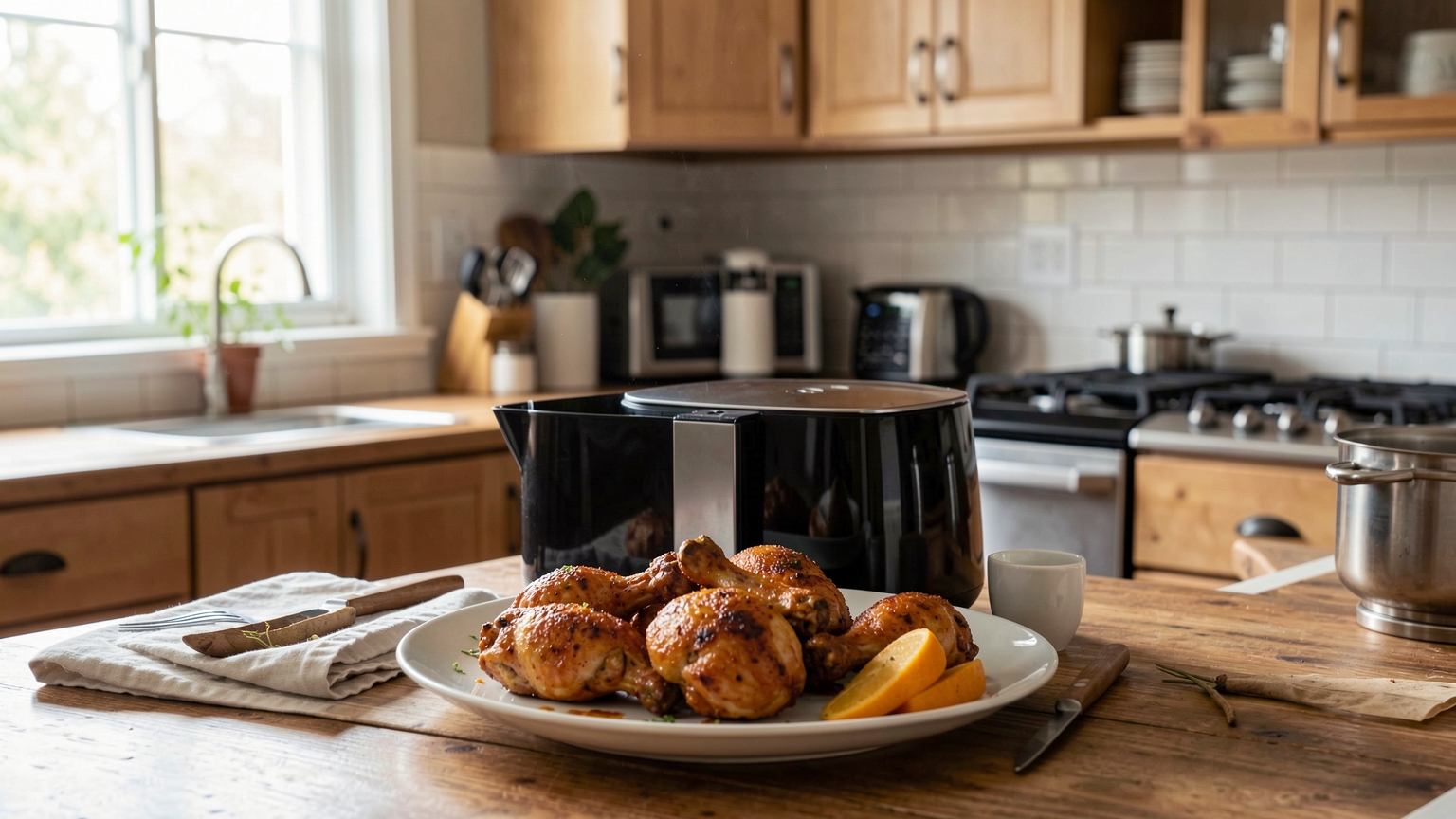
The air fryer is basically a compact convection oven that circulates hot air around food. It can brown quickly, but it can also dry out delicate proteins if you are not careful. The goal is to use the air fryer's speed without sacrificing moisture.
This guide focuses on chicken because it is the most common air fryer frustration. We will also cover general air fryer strategies that apply to vegetables, potatoes, and leftovers.
Why chicken dries out in the air fryer
Hot, fast-moving air evaporates surface moisture quickly. That is great for crisping skin, but it also speeds up moisture loss in lean meat. If you cook chicken to the same internal temperature as in an oven without adjusting time and rest, it can end up dry.
Thickness matters too. Thin cutlets cook so quickly that you can overshoot the target temperature by the time you check. The fix is a combination of brining, careful timing, and a quick rest after cooking.
Start with proper prep
Dry the surface
Pat chicken dry before seasoning. Moisture on the surface steams instead of browning, which slows crisping and encourages overcooking. A dry surface browns faster, so you can cook for less time.
Season with salt early
Salt draws a small amount of moisture to the surface, then pulls it back into the meat. Even 20 minutes of salting makes chicken noticeably juicier. If you have more time, a simple brine is even better.
Use a light coat of oil
Air fryers do not need much oil, but a light spray or brush helps with browning. Too much oil can drip and smoke, so keep it minimal.
Temperature and timing strategy
Many air fryer recipes suggest 400 degrees for everything. That can work, but it often browns the outside before the inside is ready. For chicken breasts, I prefer 360 to 375 degrees and a slightly longer time. For thighs, which have more fat, 380 to 400 degrees works well.
Use a thermometer. For chicken breast, pull it at 160 degrees and let it rest. Carryover heat will finish it safely. For thighs, you can go a bit higher for tenderness, around 170 to 175 degrees.
Spacing and airflow matter
The air fryer needs space to circulate heat. If you overcrowd the basket, the food will steam rather than crisp. Arrange chicken pieces with a little space between them, even if it means cooking in two batches. The results are worth it.
Brining for moisture insurance
A quick brine makes chicken forgiving. Mix 1 tablespoon of salt per 2 cups of water, add the chicken, and let it sit for 20 to 30 minutes. Rinse and dry well before air frying. The salt helps the meat retain moisture even if you cook it a touch too long.
Basket vs oven-style air fryers
Basket models cook faster because the food sits closer to the heating element and airflow is concentrated. Oven-style models can handle larger batches but may need a few extra minutes. If your results feel inconsistent, adjust time by 2 to 4 minutes instead of changing the temperature dramatically.
Reheating leftovers without drying
Air fryers are excellent for reheating because they restore crisp edges. To avoid drying, lower the temperature to 300 to 325 degrees and heat until just warm. A light spray of oil can revive texture without making food greasy.
Quick preheat rule
If your model has a preheat setting, use it. If not, run the empty basket for 3 minutes. That short preheat improves browning and shortens total cook time.
Rest after cooking
Give chicken a short rest before slicing. Even 3 to 5 minutes lets juices settle so the meat stays moist when you cut into it.
Light breading for extra crunch
If you want a crisper crust, toss chicken in a thin layer of seasoned breadcrumbs or panko. Spray lightly with oil and cook at 375 degrees. The breading protects the surface and adds crunch without deep frying.
Flip or rotate for even browning
Most air fryers heat from the top, so the top side browns faster. Flip halfway through to balance the color and prevent over-browning. If your basket is crowded, rotate pieces as well.
Best cuts for air frying
Chicken thighs are the most forgiving because they have more fat. Bone-in thighs crisp beautifully and stay juicy. Breasts are lean and require closer monitoring, but they can still be great if you use a thermometer. Wings are practically made for the air fryer because the skin crisps quickly.
Vegetables and sides
Once you understand airflow and moisture, vegetables become easy. Dry them well, cut them evenly, and use a high temperature to encourage caramelization. Potatoes and cauliflower are especially good in the air fryer because they crisp on the outside while staying tender inside.
Quick troubleshooting guide
If chicken is dry, reduce the temperature or pull it earlier. If the outside is pale, increase heat slightly and cook in a single layer. If the bottom is soggy, shake the basket halfway through to expose more surface area.
Related articles
- Sheet-Pan Dinners That Actually Brown: Heat, Space, and Timing
- Safe and Juicy Pork: Modern Temps and Carryover Cooking
FAQ
Do I need to preheat my air fryer?
Most models heat quickly, but a short 3 to 5 minute preheat helps with browning and even cooking.
Why is my air fryer chicken dry?
Overcooking is the main culprit. Use a thermometer and remove chicken as soon as it reaches the safe internal temperature.
Can I cook frozen chicken in the air fryer?
It is possible, but results are better if you thaw first. Frozen meat cooks unevenly and can dry out on the edges.
Conclusion
Air frying is fast, but it rewards precision. Dry the surface, season early, and use a thermometer. With those habits, you can get crisp skin and juicy meat without the guesswork.