
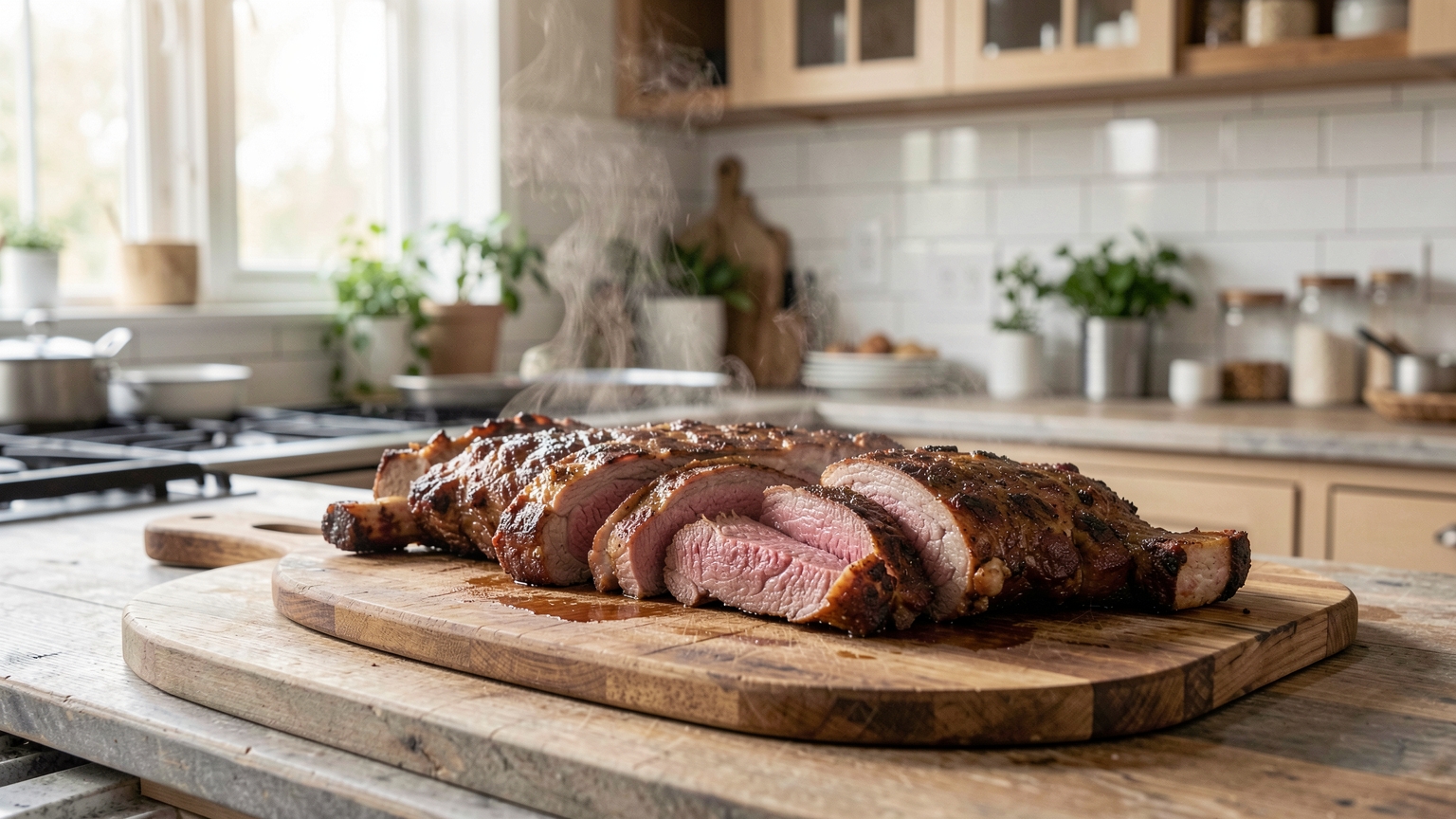
Pork has a reputation for being dry, but modern guidelines and good technique make it tender and flavorful. The biggest change in recent years is the recommended safe temperature, which is lower than many people remember. That means you can cook pork safely without overcooking it.
Safe internal temperature
The USDA recommends cooking whole cuts of pork to 145 degrees, followed by a three-minute rest. This rest time allows carryover heat to finish the cooking while keeping the meat juicy.
Different cuts, different goals
Pork tenderloin is lean and best cooked to 145 degrees with a quick rest. Pork shoulder is full of collagen and needs higher temperatures and long cooking to become tender. Chops vary widely, so thickness matters. Knowing the cut helps you choose the right method.
Quick temperature guide
| Cut | Target Temp | Texture Goal |
|---|---|---|
| Tenderloin | 145°F | Juicy, slightly pink |
| Chops (thick) | 145°F | Moist, firm |
| Shoulder | 195-205°F | Pull-apart tender |
Carryover cooking explained
Carryover cooking is the rise in internal temperature after the meat is removed from heat. For pork chops and tenderloins, carryover is usually 5 to 10 degrees. That is why pulling the meat early is important.
Thermometer placement matters
Insert the thermometer into the thickest part of the meat, away from bone. Bones conduct heat and can give a false reading. For chops, insert from the side. For roasts, aim for the center.
Best cuts and methods
Thicker chops and pork tenderloin cook best with gentle heat. Sear for color, then finish in a moderate oven. For shoulder and other tough cuts, a long braise or slow cook breaks down collagen for tender results.
Brining and dry brining
A quick brine adds insurance. For chops, a 30-minute brine in lightly salted water helps retain moisture. For roasts, a dry brine of salt rubbed on the surface overnight seasons more deeply and helps the exterior brown.
Searing and finishing for better texture
For chops and tenderloin, sear over medium-high heat to build color, then finish in a moderate oven. This prevents the exterior from burning while the interior catches up. If you grill, use direct heat for searing and move to indirect heat to finish gently.
How to keep pork juicy
Use a thermometer, rest the meat, and avoid cutting into it too soon. Light salting before cooking also helps retain moisture. If you are grilling, keep a cooler zone for indirect heat so the meat finishes evenly.
Resting guidelines
Rest small cuts for 5 to 7 minutes and larger roasts for 10 to 15 minutes. This allows the juices to redistribute and the carryover heat to finish the cooking. Cutting too early is the fastest way to lose moisture.
Flavor pairings that work well
Pork pairs with sweet and acidic flavors. Apple, mustard, and vinegar-based sauces brighten the meat without overpowering it. A simple pan sauce with cider and a touch of mustard is a reliable weeknight option.
Slicing and serving
Slice pork tenderloin into medallions after resting. For chops, slice against the grain if the muscle fibers are visible. Serving immediately after slicing keeps the meat moist and warm.
Marinades that help, not hinder
Short marinades add flavor to the surface, but long acidic marinades can change texture. For chops, keep acidic marinades under 2 hours. For shoulder, a longer marinade is fine because the meat will be cooked for a long time.
Even cooking for thick chops
Thick chops benefit from a gentle approach. Sear on both sides, then lower the heat or move to the oven so the center can catch up. If the exterior browns too fast, the pan is too hot or the chop is too thin for that heat level.
Quick pan sauce finish
After cooking pork chops, deglaze the pan with a splash of broth or cider and scrape up the browned bits. Simmer for a minute, then whisk in a small piece of butter. This adds moisture and flavor without extra cooking time.
Slow-cooked pork timing
For pulled pork, cook to 195 to 205 degrees so collagen fully melts. This is a different goal than chops or tenderloin. The higher temperature makes the meat shred easily and stay moist even after reheating.
Ground pork safety
Ground pork should be cooked to 160 degrees because the grinding process exposes more surface area. Use a thermometer and avoid undercooking when making meatballs or patties.
Reheating leftovers
Reheat pork gently with a splash of broth or water to keep it moist. Low heat and a covered pan help retain moisture, especially for chops that can dry out quickly when reheated.
Microwaving on lower power also helps prevent toughness.
Leftover pork is excellent sliced thin for sandwiches or salads.
Keep sauces on the side so reheated pork stays tender and does not overcook.
Slice only what you plan to serve to preserve moisture.
Whole pieces stay juicier than pre-sliced leftovers.
Covering the pork lightly helps retain moisture.
Resting is still essential on day two.
Moisture management is the key to pork you enjoy.
Use a thermometer every time for consistent results.
Related articles
- Searing Steak on the Stovetop: Thick Cuts, Smoke Control, Resting
- Air Fryer Basics: Crispy Results Without Dry Chicken
FAQ
What is the safe internal temperature for pork?
The USDA recommends 145 degrees with a three-minute rest for whole cuts of pork.
Why is my pork dry?
Overcooking is the main cause. Use a thermometer and pull the pork early to account for carryover heat.
What is carryover cooking?
Carryover cooking is the rise in internal temperature after the meat is removed from heat.
Conclusion
Modern pork can be juicy and safe at the same time. The key is accurate temperature, gentle heat, and proper resting. Once you adopt these habits, dry pork becomes a thing of the past.