
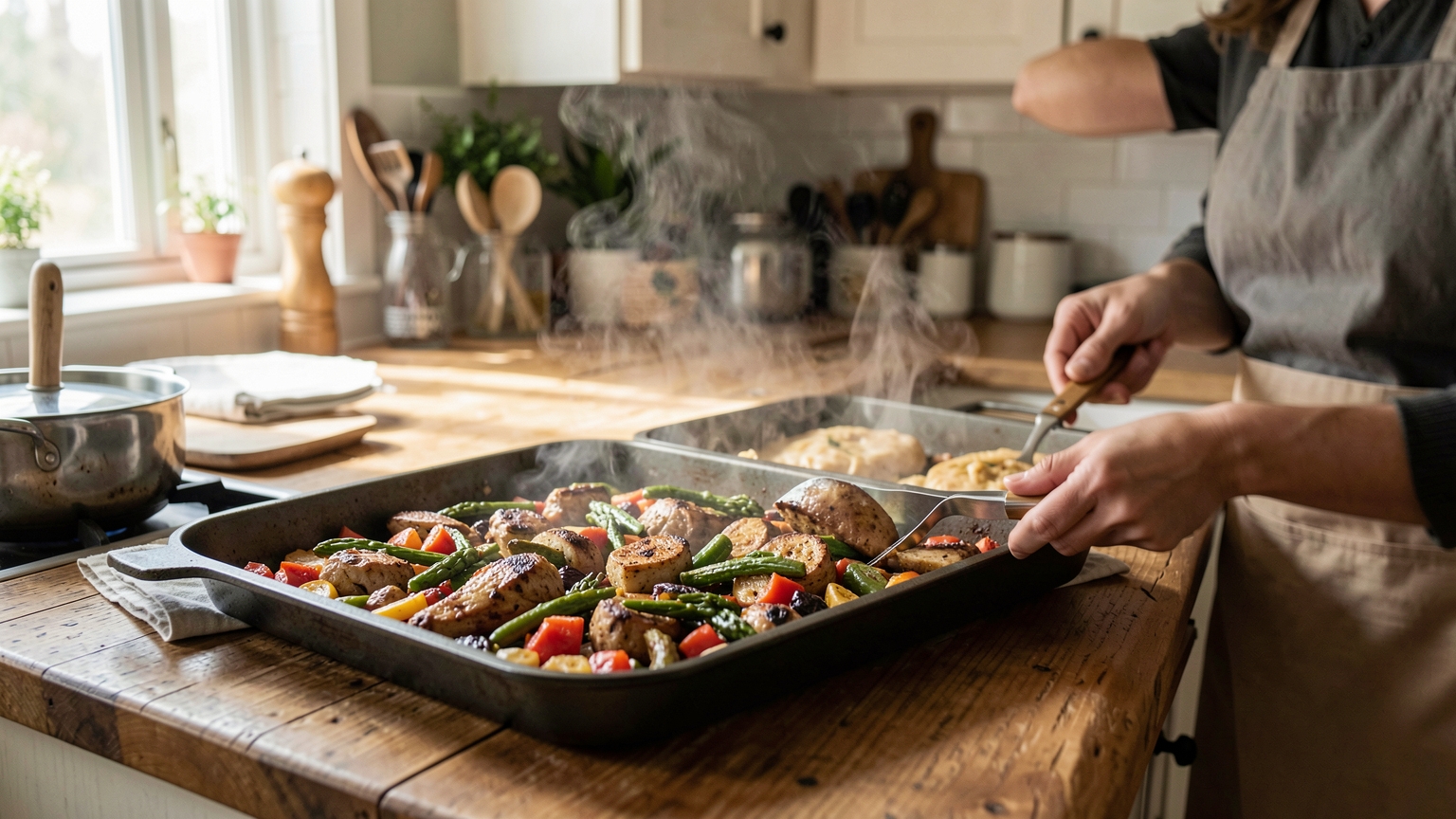
Sheet-pan dinners are a gift on busy nights, but they often turn out pale and soggy. The issue is not the recipe, it is physics. Browning needs high heat, dry surfaces, and space for steam to escape. If your sheet-pan dinner looks steamed instead of roasted, it is because one of those three factors is missing.
Here is how to get real caramelization on a single pan without turning dinner into a mess.
High heat is non-negotiable
Roasting is different from baking. For browning, you need higher heat, usually 425 to 450 degrees. Lower temperatures cook the food, but they do not evaporate moisture fast enough to create color. Preheat the oven fully and let the sheet pan heat with it if possible.
Preheating the pan gives you a head start on browning. When food hits hot metal, moisture sizzles away quickly instead of pooling.
Sheet pan material makes a difference
Dark, heavy pans brown faster because they absorb more heat. Thin, light pans can warp and create uneven hot spots. If your pan is thin, reduce the heat slightly to avoid burning on the edges and rotate the pan halfway through cooking.
Space is the secret ingredient
When ingredients touch, steam gets trapped. The surface stays wet, and wet food will not brown. Spread everything in a single layer with a little breathing room. If your pan is too crowded, use two pans or cook in batches. It is better to wash an extra pan than to eat steamed vegetables.
Glazes and sauces need timing
Sweet sauces burn quickly at high heat. If you are using a glaze, add it in the final 5 to 10 minutes. This way it caramelizes without scorching. For sticky sauces, a quick broil at the end can help, but watch closely.
Dry surfaces brown better
Pat proteins and vegetables dry before seasoning. Moisture is the enemy of crisping. For vegetables that release water, like zucchini or mushrooms, cut them larger or roast them separately so they have room to evaporate.
Timing matters more than you think
Not all ingredients cook at the same speed. Chicken thighs and carrots take longer than broccoli or cherry tomatoes. Add fast-cooking vegetables partway through so everything finishes together and stays colorful.
A simple method is to start with the longest-cooking items, then add quicker ingredients in stages. Keep a small bowl of prepped vegetables nearby and slide them onto the pan at the right time.
Oil and seasoning strategy
Oil is not just for flavor. It conducts heat and helps browning. Use enough to lightly coat the surface. Too little oil leads to dry, pale surfaces, while too much can cause splattering and greasy results.
Season with salt and pepper before roasting, but add delicate herbs or finishing acids after roasting so they stay bright.
Protein tips for sheet-pan success
Thighs are the easiest protein for sheet-pan dinners because they stay juicy. If you use chicken breasts, consider cutting them into thicker, even pieces. For sausages or pork chops, do not crowd them next to watery vegetables. Give them their own space.
Use a thermometer for confidence
Sheet-pan meals can be uneven if your oven has hot spots. A quick thermometer check ensures chicken is safe and vegetables are tender. Pull proteins a few degrees early and let them rest while the vegetables finish.
Broil for a final crisp
If the food is cooked but not browned enough, switch to broil for 1 to 2 minutes. Keep the pan close to the top element and watch closely so the edges do not burn. This quick step adds color without overcooking the center.
Batching for better results
If you are feeding a crowd, use two pans and rotate them halfway through. This keeps the heat even and prevents steam buildup, which is the main cause of pale sheet-pan dinners.
Use convection if available
Convection moves hot air around the pan, which speeds up browning. Reduce the oven temperature by about 25 degrees to prevent burning while keeping the crisp edges.
Preheat the pan
Sliding ingredients onto a hot pan jump-starts browning, especially for potatoes and vegetables with lots of moisture.
Doneness cues
Look for sizzling edges and a light golden color rather than relying on time alone.
When juices run clear and vegetables are lightly blistered, the pan is ready.
Trust the color and aroma more than the clock.
Vegetable tips for crisp edges
Cut vegetables in uniform sizes. Smaller pieces cook faster and brown more, but they can also dry out. For potatoes, parboiling helps, but a high-heat roast can work if you cut them smaller and coat them well with oil.
Sheet-pan meal formula
Here is a reliable formula: start with protein and dense vegetables at 425 degrees, roast for 12 to 15 minutes, add quicker vegetables, then roast until the protein is done and the vegetables are browned. Finish with a squeeze of lemon or a quick sauce.
Related articles
- Vegetable Roasting Guide: Caramelization Without Soggy Trays
- Air Fryer Basics: Crispy Results Without Dry Chicken
FAQ
Why do my sheet-pan dinners turn out soggy?
Overcrowding and low heat trap steam. Use higher heat and leave space between ingredients.
Should I line my sheet pan with foil or parchment?
Both work. Foil encourages browning, parchment reduces sticking but can slightly reduce browning.
Can I mix raw chicken and vegetables on the same pan?
Yes, but place vegetables that cook quickly on the pan later so everything finishes at the same time.
Conclusion
Great sheet-pan dinners are about control: heat, space, and timing. Use a hot oven, give ingredients room, and add items in stages. Once you master these basics, sheet-pan cooking becomes one of the most reliable tools in your weekly rotation.