
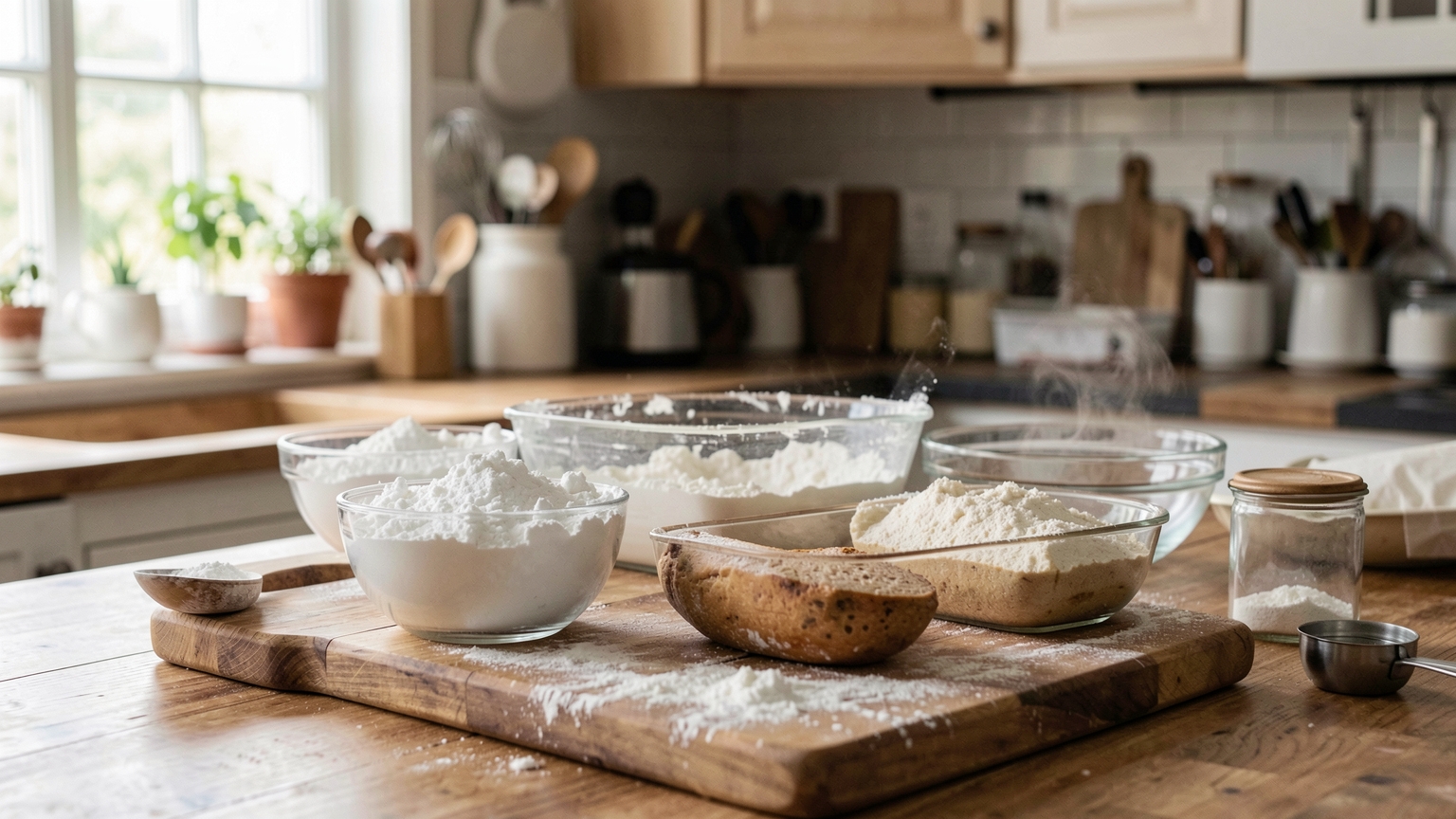
Baking soda and baking powder look similar, but they behave very differently in a recipe. Using the wrong one can cause dense cakes, flat cookies, or bitter flavors. Understanding how each works will make your baking more reliable and help you troubleshoot problems quickly.
What baking soda does
Baking soda is pure sodium bicarbonate. It needs an acid to react and release carbon dioxide. That gas creates lift in batters and doughs. Common acids include lemon juice, yogurt, buttermilk, brown sugar, and cocoa powder.
If there is not enough acid, baking soda can leave a soapy, bitter taste. It can also cause the baked good to brown too quickly because it raises the pH.
What baking powder does
Baking powder is a mix of baking soda, acid, and starch. The acid is built in, so it can rise without an additional acidic ingredient. Most baking powder is double-acting, which means it releases gas when mixed with liquid and again when heated.
Common acids that activate baking soda
Yogurt, buttermilk, citrus juice, molasses, honey, brown sugar, and natural cocoa powder all provide enough acidity to activate baking soda. If your recipe has one of these, baking soda is likely the right choice. If it does not, baking soda can cause a soapy flavor.
How to choose between them
If your recipe has a strong acidic ingredient, use baking soda. If it does not, use baking powder. Some recipes use both for a balanced rise and browning control.
How leavening affects browning
Baking soda raises the pH of batter, which speeds up browning. This is why cookies with baking soda brown more deeply. Baking powder is more neutral, so it creates a lighter color. If your baked goods are too pale, a small amount of baking soda can help.
How much to use
As a general guide, 1/4 teaspoon of baking soda can neutralize about 1/2 cup of an acidic ingredient. Baking powder is usually used at about 1 teaspoon per cup of flour for cakes and muffins. These are rough guidelines, but they help you diagnose why a recipe rises too little or tastes off.
Substitution rules that actually work
If a recipe calls for baking powder and you only have baking soda, you need to add acid. A common swap is 1 teaspoon baking powder equals 1/4 teaspoon baking soda plus 1/2 teaspoon of cream of tartar. If you do the reverse, use 4 times the baking powder to replace baking soda, but expect less browning and a milder flavor.
Troubleshooting common baking issues
If a cake rises and then collapses, it likely had too much leavening or the oven was too cool. If muffins dome too aggressively and crack, the leavening may be too strong or the heat too high. If cookies spread too much, baking soda may be too low or the dough too warm. These clues help you pinpoint the leavening problem quickly.
Natural vs Dutch-processed cocoa
Natural cocoa is acidic and pairs well with baking soda. Dutch-processed cocoa is treated to neutralize acidity, so it usually needs baking powder instead. If you swap cocoa types without adjusting leavening, you can end up with a flatter cake or a bitter taste.
Mixing order and timing
Once baking soda is activated, it starts releasing gas immediately. That means batters with baking soda should go into the oven quickly after mixing. Baking powder gives you a little more flexibility, but long waits still reduce rise. If you are making pancakes or muffins, preheat the oven or griddle first, then mix the batter.
Small adjustments for high altitude
At higher elevations, baked goods can rise too quickly and collapse. Reducing leavening slightly and increasing baking temperature a touch can help. If you live at altitude, test small adjustments and note the results for future batches.
Quick sanity check
If a recipe feels wrong, compare the flour amount to the leavening. Most cakes and muffins need about 1 teaspoon baking powder per cup of flour. If you see much more than that, the recipe may rise too fast and collapse.
Real-world examples
Buttermilk pancakes use baking soda because buttermilk is acidic. A plain vanilla cake without acidic ingredients relies on baking powder. Chocolate cakes may use both because cocoa is mildly acidic and the batter is heavy.
How leavening affects texture
Baking soda creates a quick rise that can lead to a coarse crumb if overused. Baking powder provides a steadier rise, which is better for cakes and muffins. Choosing the right leavening agent affects texture as much as taste.
Storage and freshness
Both baking soda and baking powder lose power over time. Store them in a cool, dry place and replace them every 6 to 12 months. Old leavening leads to flat baked goods even if the recipe is correct.
Simple freshness tests
To test baking soda, add a small pinch to a spoonful of vinegar or lemon juice. It should fizz immediately. To test baking powder, add a small amount to hot water; it should bubble vigorously. If either is weak, replace it before baking.
Related articles
- The Ultimate Guide to Measuring Flour Correctly (By Weight vs Volume)
- Kitchen Scale Benefits: Consistency in Baking and Meal Prep
FAQ
Can I substitute baking soda for baking powder?
Only with adjustments. Baking soda needs an acid, and it is more potent. Substituting directly can throw off flavor and rise.
Why do my cookies taste bitter?
Too much baking soda can cause bitterness. Make sure the recipe has enough acid to balance it.
What is double-acting baking powder?
It releases gas twice: once when mixed with liquid and again when heated, creating a more reliable rise.
Conclusion
Leavening is a quiet hero in baking. When you know how baking soda and baking powder work, you can fix recipes, substitute with confidence, and avoid common baking pitfalls.