
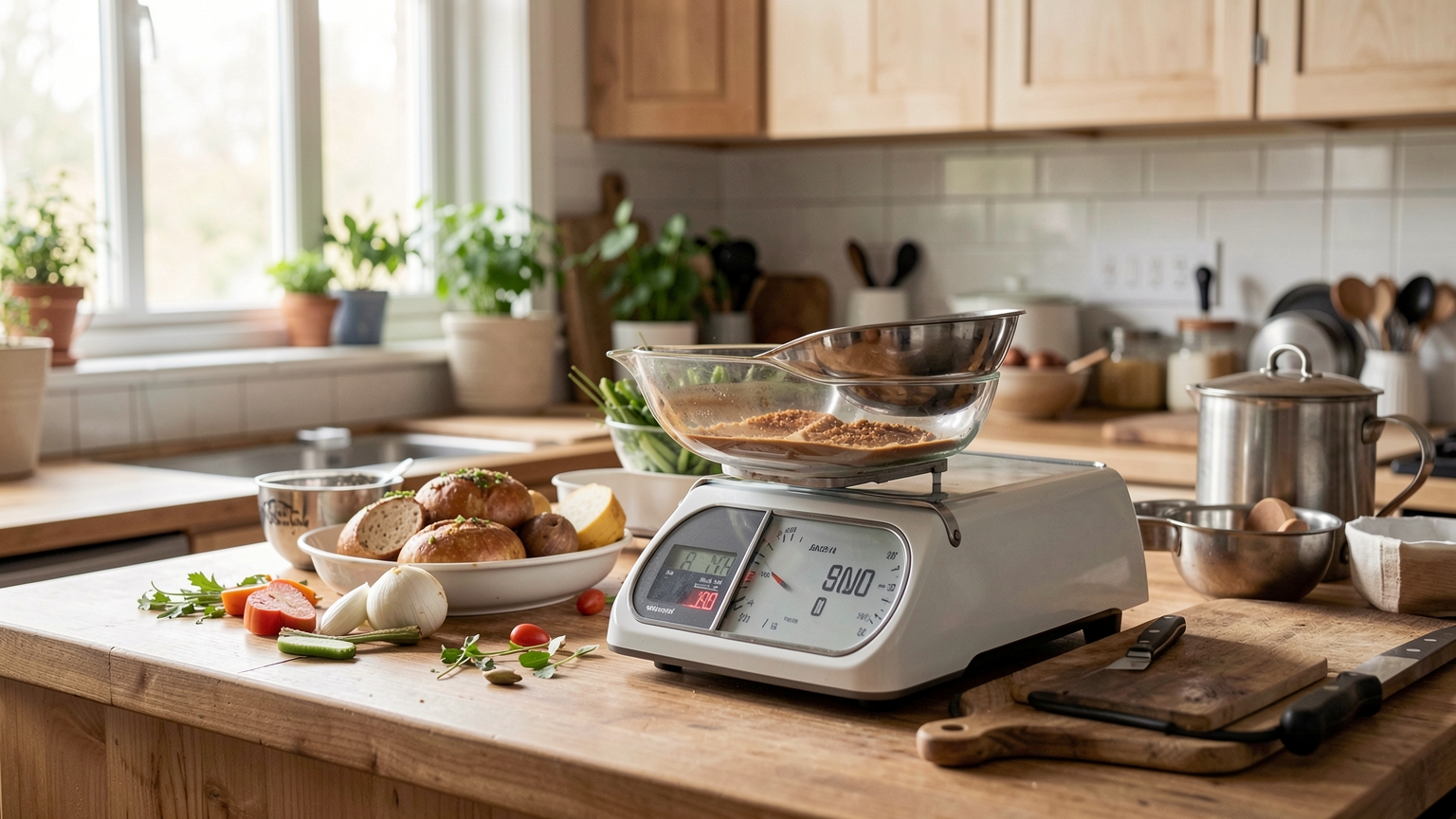
A kitchen scale is the quiet workhorse of a reliable kitchen. It makes baking more consistent, meal prep faster, and portioning easier. If you cook from scratch even a few times a week, a scale quickly becomes one of the most useful tools you own.
Consistency in baking
Baking is precise, and small differences in flour or sugar can change a recipe. Measuring by weight removes those variables. The same cookie recipe will turn out the same every time because the ingredient ratios stay consistent.
Better bread with hydration math
In bread baking, hydration is the percentage of water relative to flour weight. If you weigh flour and water, you can control dough texture precisely. A 70 percent hydration dough behaves very differently than a 60 percent dough, and the scale makes those differences repeatable.
Accuracy for nutrition tracking
If you track protein or calories, a scale is the most accurate way to portion. Estimating by cups or handfuls can be inconsistent. Weighing portions takes seconds and makes meal planning more predictable.
Portion control and meal prep
Scales make meal prep predictable. If you want 4 equal portions of chili or 6 burger patties of the same size, weight is the fastest way to get there. It is also helpful for tracking nutrition or portioning snacks.
Tips for accurate weighing
Place the scale on a flat surface and use the tare function between ingredients. If you are weighing sticky ingredients like honey, pour slowly and tare often. For small amounts like yeast, a scale with 0.1 gram precision is ideal.
Liquids and oils are easier by weight
Measuring oil in a cup leaves residue that is hard to clean. Weighing oil directly into the bowl prevents waste and keeps ratios consistent. The same goes for milk, yogurt, and broth. Weight is fast and clean.
Fewer dishes, faster workflow
Weighing ingredients directly into one bowl means fewer measuring cups and spoons to wash. This is especially helpful for baking, where multiple ingredients are measured one after another.
Converting favorite recipes to grams
Pick one recipe you bake often and convert the ingredients to grams. Write the weights in the margin or keep a quick note on your phone. Once you see how consistent the results are, you can convert other recipes gradually instead of all at once.
Precision for coffee and tea
If you brew coffee or tea, a scale helps you dial in repeatable strength. A simple ratio like 1:16 coffee to water becomes easy to follow, and your morning brew tastes the same every day.
Choosing a scale
Look for a scale that measures in grams and ounces, has a tare button, and a platform large enough for a mixing bowl. A slim scale stores easily in a drawer, which means you will actually use it.
Why pros weigh sauces and marinades
In sauces, ratios matter. Weighing vinegar, oil, and sweeteners keeps flavor balanced, especially when you scale up. If you make the same dressing every week, weight measurement gives you the exact same tang and sweetness without extra tasting.
Meal prep example with weights
For a simple chicken bowl, weigh 150 grams cooked chicken, 120 grams rice, and 100 grams roasted vegetables per container. This keeps portions consistent and simplifies reheating times. Once you have a few go-to weights, meal prep becomes faster and less guessy.
Spice blends by weight
If you make your own seasoning blends, weighing spices keeps the ratio stable. A small digital scale makes it easy to scale a spice mix from a single batch to a jar that lasts a month without guesswork.
Pastry and dough control
Pastry dough is sensitive to flour and butter ratios. A few extra tablespoons of flour can make pie crust tough. Weighing ingredients keeps the dough tender and predictable, which saves time during rolling and baking.
Reliable batters and pancakes
For pancakes and waffles, weight measurement helps you hit the same batter thickness each time. This keeps browning and cook time consistent, so you can serve a whole batch at once.
Sticky ingredients made easy
Weigh peanut butter, honey, or syrup directly into a bowl. You avoid messy measuring cups and get exact amounts without scraping every spoon.
This also reduces waste when ingredients cling to cups.
Once you get used to it, weighing feels faster than measuring.
After a week of cooking with a scale, most people stop reaching for measuring cups.
The workflow becomes automatic very quickly.
It is one of the easiest upgrades you can make in a home kitchen.
Example: quick overnight oats
I weigh 50 grams of oats, 120 grams of milk, and 10 grams of chia in one jar, then add fruit. The ratios stay consistent, and cleanup is minimal. This is the kind of simple routine where a scale pays off immediately.
Scaling recipes up or down
Scaling a recipe becomes easy when everything is in grams. Want half a recipe? Divide the weights by two. Want to double it? Multiply by two. You avoid messy fraction conversions and get the same flavor balance.
Related articles
- The Ultimate Guide to Measuring Flour Correctly (By Weight vs Volume)
- Baking Soda vs Baking Powder: When Each Matters
FAQ
Is a kitchen scale only for baking?
No. It helps with portioning, meal prep, and consistency in savory cooking.
What features matter in a kitchen scale?
Look for a tare button, a clear display, and the ability to switch between grams and ounces.
Does using a scale reduce dishes?
Yes. You can weigh ingredients directly into one bowl instead of using multiple measuring cups.
Conclusion
A scale is not just for professionals. It is a simple, affordable tool that makes cooking more consistent and less stressful. Once you use it, you will wonder how you cooked without it.