
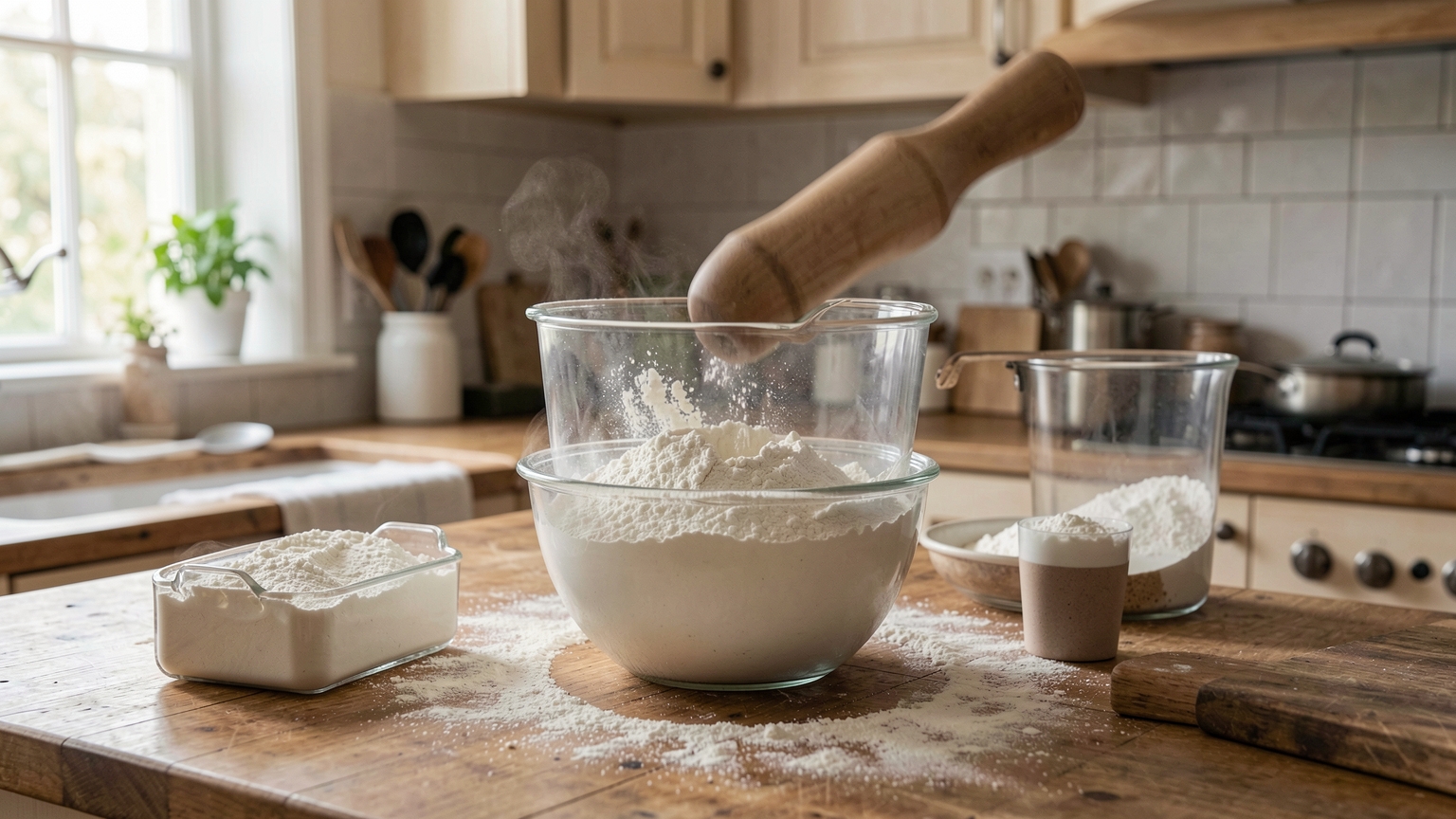
If your cakes are dense, your cookies spread too much, or your muffins feel dry, flour measurement might be the culprit. Flour is light, compressible, and sensitive to humidity, which makes it one of the most inconsistent ingredients in baking. A small difference in flour weight can shift the entire balance of a recipe.
Professional bakers measure by weight because it removes guesswork. But most home recipes still use cups. This guide shows you how to measure accurately either way, explains why weight is more reliable, and offers practical fixes when you do not have a scale handy.
Why flour is tricky to measure
Flour settles as it sits. If you scoop directly from the bag, you pack more flour into the cup. If you spoon flour into the cup, you add less. Those differences can add up to 20 or 30 grams per cup, which is enough to change the texture of a cake or the chew of a cookie.
Humidity plays a role too. Flour absorbs moisture from the air. On a humid day, the same cup measurement can weigh more than it does on a dry day. This is why weight is the gold standard: it ignores packing and humidity.
Weight vs volume: what changes in your baked goods
When flour is over-measured, the dough becomes stiff. Cookies spread less, cakes rise unevenly, and quick breads feel dry. Under-measured flour does the opposite: it weakens structure and can lead to gummy centers. Measuring by weight keeps the flour-to-liquid ratio consistent, which is the backbone of good baking.
The most common weight reference for all-purpose flour is 120 to 130 grams per cup, depending on the source. The key is to pick a standard and stick to it. Consistency matters more than perfection.
How to measure flour by weight
1. Place the bowl on the scale
Turn on your scale and set the bowl on it. Use the tare button to reset the scale to zero.
2. Spoon flour into the bowl
Add flour slowly until the weight matches the recipe. If you go over, remove a small amount with a spoon rather than dumping it back into the bag, which can make a mess.
3. Keep a conversion note
If your favorite recipe uses cups, write the gram equivalent on the page. That way you can use weight next time without recalculating.
How to measure flour without a scale
When you do not have a scale, the spoon-and-level method is the most reliable. Use a spoon to fluff the flour, then lightly spoon it into the measuring cup. Level it off with a straight edge. Avoid tapping the cup or packing the flour down.
Do not shake the cup to make more room. That compresses the flour and changes the weight. If your recipe writer is a professional baker, they almost always assume a spoon-and-level approach.
Understanding different flours
Not all flour weighs the same. Bread flour is higher in protein and slightly heavier. Whole wheat flour absorbs more moisture and feels denser. Cake flour is lighter. If your recipe calls for a specific type of flour, use it. Substitutions change both weight and structure, which changes the outcome.
Practical examples from a home kitchen
When I bake banana bread, I target 250 grams of flour for a standard loaf. If I use cups, I need about two cups plus a small spoonful, but the difference between 240 and 280 grams is noticeable. The lighter loaf feels tender, the heavier one turns dry. The scale makes that choice automatic.
For cookies, a 20-gram difference can be the line between thick and thin. I have tested the same recipe with different flour weights and the spread changes every time. This is why scale measurement is the fastest way to repeat a result you love.
How to convert recipes to grams
Start with a trusted conversion table. For all-purpose flour, use 125 grams per cup as a reliable midpoint. Then bake and adjust if needed. If you consistently prefer a softer texture, reduce the weight slightly. If you prefer a firmer crumb, increase it a touch. Once you find your sweet spot, write it down.
Scoop methods compared
Direct scooping is the least accurate because it packs flour into the cup. Spoon-and-level is more consistent, but it still varies depending on how aggressively you fill the cup. If you are committed to volume measurements, spoon-and-level is the best compromise. The key is to use the same method every single time.
Humidity, storage, and flour behavior
Flour absorbs moisture from the air, which makes it heavier and clumpier. Store flour in a sealed container in a cool, dry cabinet to keep it stable. If flour looks clumpy or feels damp, let it sit out for a few minutes and whisk it to aerate before measuring.
What dough and batter can tell you
Even with careful measuring, your dough may need small adjustments. A cookie dough should feel slightly tacky but hold its shape. A cake batter should pour in a smooth ribbon, not feel thick like paste. These cues help you correct small measurement differences before baking.
Why a scale is the single best baking tool
A small scale is inexpensive and removes the biggest variable in baking. It also makes it easy to scale recipes up or down. If a recipe makes 24 cookies but you want 12, just divide the gram measurements by two. No messy fractions needed.
Related articles
- Baking Soda vs Baking Powder: When Each Matters
- Kitchen Scale Benefits: Consistency in Baking and Meal Prep
FAQ
How much does one cup of all-purpose flour weigh?
Most bakers use 120 to 130 grams for one cup of all-purpose flour. Consistency matters more than the exact number.
What is the best way to measure flour without a scale?
Spoon flour into the cup and level it with a straight edge. Avoid scooping directly from the bag.
Why do baked goods turn out dry when I use cup measurements?
Scooping packs extra flour into the cup, which increases the flour-to-liquid ratio and makes baked goods dry.
Conclusion
Flour measurement is a small step that creates a big shift in baking results. If you can, measure by weight. If you cannot, use the spoon-and-level method and stay consistent. Your cookies, cakes, and breads will thank you.