
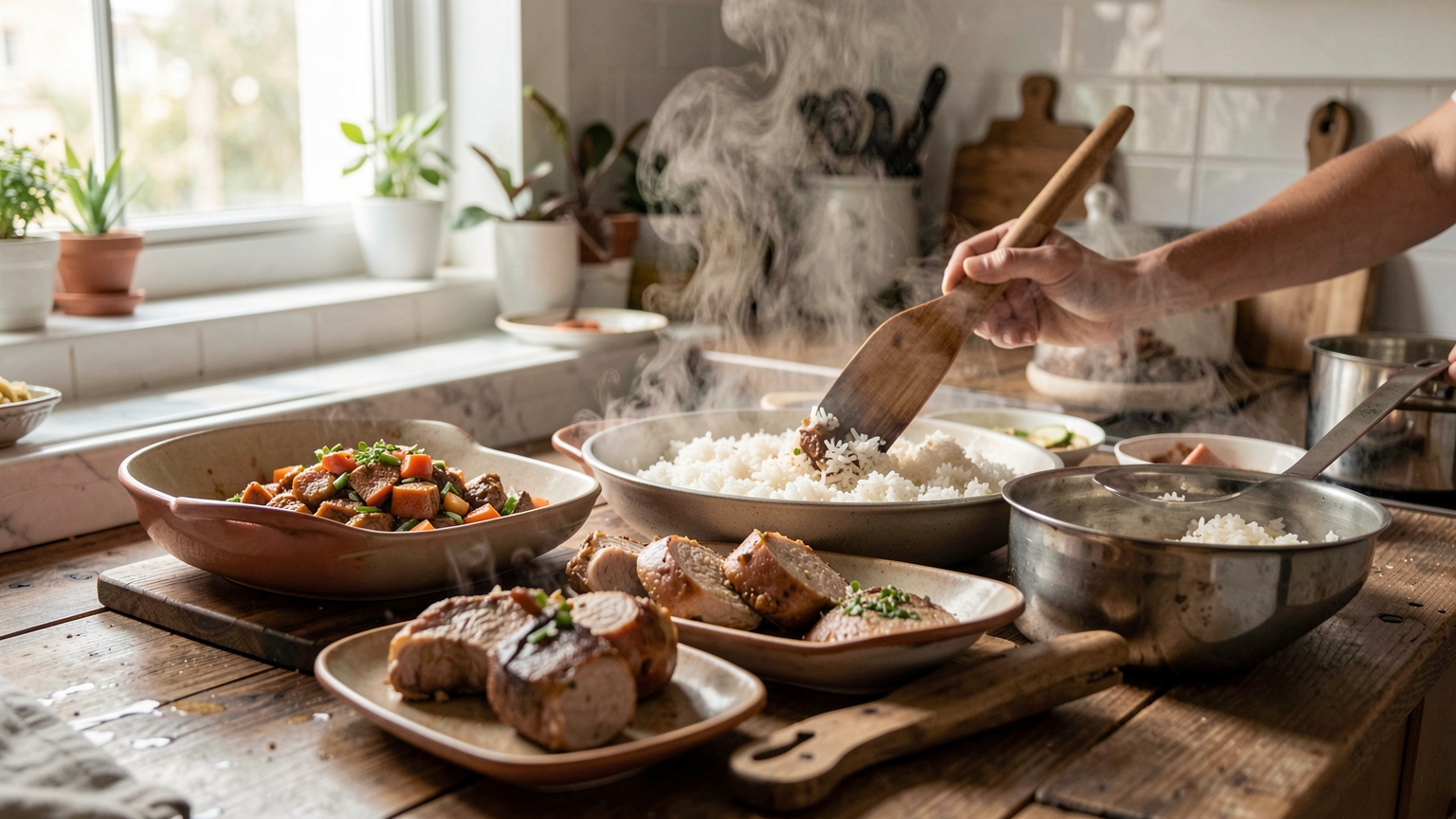
Rice is simple, but it is not one-size-fits-all. The rice you want for sushi is not the same rice you want for fried rice. The secret is adjusting the rinse, water ratio, and resting method so the texture matches the dish. Once you understand the variables, rice becomes predictable instead of mysterious.
Rinse or not? It depends on texture
Rinsing removes surface starch. Less starch means fluffier grains. For pilaf or steamed rice, rinsing is usually helpful. For risotto or sticky rice dishes, you want the starch, so rinsing is minimal or skipped.
For sushi rice, rinse until the water runs nearly clear. This keeps the grains distinct while still allowing the added vinegar seasoning to coat them.
Water ratios by dish
For standard long-grain white rice, a 1:1.5 or 1:1.75 ratio of rice to water works well. For pilaf, use a slightly lower ratio because the rice is lightly toasted in fat first. For fried rice, the goal is drier grains, so use less water and let the rice chill after cooking.
For sushi rice, the ratio is usually closer to 1:1.1 to 1:1.2, depending on the rice variety. Sticky rice for sushi needs less water than fluffy rice because the grains absorb moisture differently.
Pilaf method for flavorful, fluffy rice
Pilaf starts with fat and aromatics. Saute onions or garlic in butter or oil, then add dry rice and toast it for a minute. This coats the grains and helps them stay separate. Add warm stock, bring to a gentle simmer, cover, and cook on low. Let it rest off heat for 10 minutes before fluffing.
Sushi rice method for sticky, glossy grains
Sushi rice needs a thorough rinse, careful water measurement, and a gentle steam. After cooking, transfer it to a wide bowl and fold in seasoned rice vinegar while fanning it lightly. The goal is to cool the rice quickly without crushing the grains. The result is sticky but not mushy.
Fried rice method for separation
Fried rice is all about dry, firm grains. Cook the rice with slightly less water, then spread it on a tray to cool. Refrigerate it overnight if possible. Cold rice is less likely to clump in the pan, which means better texture and less sticking.
When cooking fried rice, use high heat and add ingredients in batches so the rice can crisp instead of steam.
Resting time is not optional
After the rice finishes cooking, let it rest with the lid on for 10 minutes. This allows moisture to redistribute and finish steaming the grains. Skipping the rest often leads to gummy rice at the bottom and undercooked rice on top.
Rice cooker vs stovetop
Rice cookers simplify timing and reduce the risk of scorching. If you use a rice cooker, follow the manufacturer's water lines for your rice type and still let the rice rest after it switches to warm. On the stovetop, use a heavy pot with a tight lid to keep steam in.
Soaking and salting
Soaking rice for 20 to 30 minutes can shorten cooking time and improve texture, especially for basmati. Salting the cooking water lightly seasons the rice from within. If you are using salted stock, reduce added salt to avoid an overly salty dish.
Quick troubleshooting
If rice is undercooked, add a few tablespoons of hot water, cover, and steam for a few minutes. If rice is too wet, remove the lid and let it sit on low heat for a minute or two to evaporate excess moisture. These small adjustments can save a batch.
Altitude adjustments
At higher altitudes, water boils at a lower temperature, so rice can take longer. Add a few extra tablespoons of water and increase the cook time slightly. A longer rest time helps finish the grains without overcooking the surface.
Quick ratio reference
| Rice Type | Water Ratio | Texture |
|---|---|---|
| Long-grain white | 1:1.5 | Fluffy |
| Jasmine | 1:1.4 | Soft and aromatic |
| Basmati | 1:1.6 | Separate grains |
| Sushi rice | 1:1.1 | Sticky |
Rinsing technique that works
Rinse rice in a bowl rather than under a running stream. Swish with your hand, drain, and repeat two or three times. This method removes surface starch without losing grains down the sink.
Keep the lid closed
Steam is the engine of rice cooking. Opening the lid releases that steam and changes the cooking time, so resist the urge to peek.
Choosing the right rice variety
Long-grain rice is fluffy and separate. Medium-grain rice is slightly sticky and great for sushi or creamy dishes. Short-grain rice is very sticky and ideal for rice balls. Jasmine is fragrant and soft, while basmati is fragrant and drier. Match the variety to the dish for best results.
Common rice mistakes
Stirring the rice while it cooks releases starch and makes it gummy. Opening the lid too often releases steam and disrupts the cooking process. Measure water carefully and resist the urge to peek.
Related articles
- How to Read a Recipe Like a Pro: Timing, Mise en Place, and Heat Cues
- Salt Smarter: Seasoning Stages for Better Flavor
FAQ
Should I rinse rice before cooking?
Rinsing removes surface starch and leads to fluffier grains. For sushi rice, rinsing is essential.
Why is my rice mushy?
Too much water or too much stirring can make rice mushy. Use the right ratio and let it steam undisturbed.
How do I make rice for fried rice?
Cook it slightly dry, then chill it overnight so the grains firm up and separate in the pan.
Conclusion
Rice becomes easy when you match the method to the dish. Rinse for fluff, reduce water for fried rice, and respect the rest time. With those three habits, your rice will turn out reliably every time.