
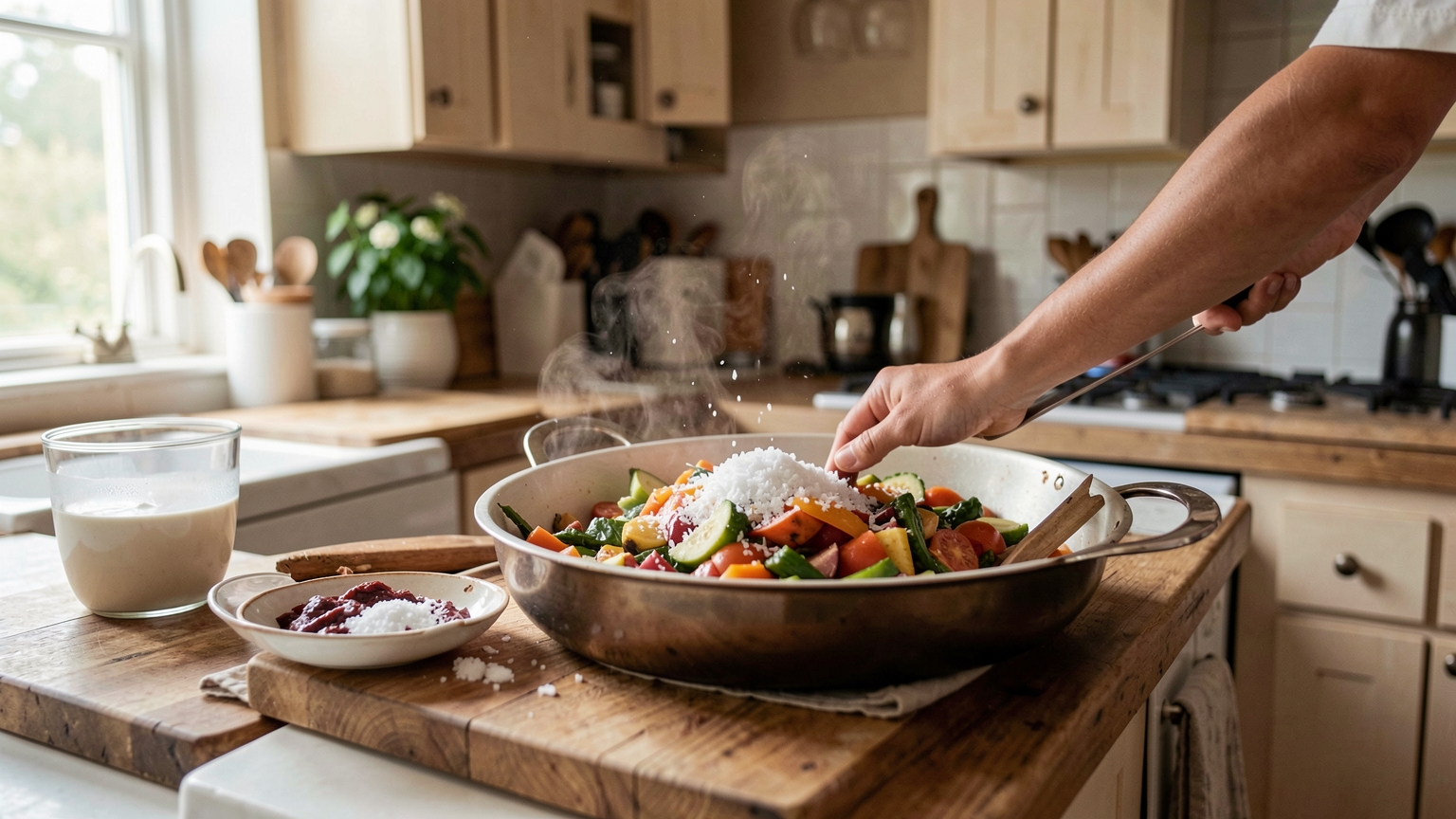
Salt is the simplest seasoning, but it is also the most misunderstood. Most home cooks add salt only at the end, which leaves food tasting flat. Seasoning in stages allows salt to penetrate, balance, and highlight flavor instead of sitting on the surface.
Salt early for deeper flavor
Salt draws moisture out, then back in, which helps season food from within. For meats, salting 20 to 60 minutes before cooking improves texture and flavor. For soups and sauces, add a small amount at each step rather than dumping it in at the end.
Salted water makes a difference
When you boil pasta or potatoes, the only way to season the inside is the cooking water. Salt it until it tastes pleasantly briny. This is not about making the dish salty; it is about building flavor from the inside out.
Salt changes texture
In vegetables, salt helps break down cell walls, which softens them and releases natural sweetness. In proteins, it helps retain moisture during cooking. This is why a properly salted roast tastes both juicier and more flavorful.
Brining for lean meats
Lean proteins like chicken breast or pork tenderloin benefit from a quick brine. A short soak in lightly salted water helps the meat retain moisture and seasons it evenly. Even 20 minutes makes a noticeable difference.
Different salts, different strengths
Kosher salt is less dense than table salt. If you switch types without adjusting, your seasoning will change dramatically. For consistent results, measure by weight or keep the same salt for most recipes.
Finishing salt for texture
Flaky salts like Maldon are best as a finishing touch. A small pinch adds a crisp texture and a bright pop of saltiness. Use it on roasted vegetables, steaks, or even chocolate desserts.
Salt and acid balance
Salt makes flavors louder, while acid makes them brighter. If a dish tastes flat, try a squeeze of lemon or a splash of vinegar before adding more salt. Often a little acid makes the existing salt feel more present.
Salting beans and grains
For beans, light salting during cooking helps the beans absorb flavor and prevents bland centers. For rice or grains, season the cooking water. It is the simplest way to make grains taste good without relying on heavy sauces.
What to do if you oversalt
If a soup or stew is too salty, add a little water or unsalted stock and simmer to rebalance. For sauces, add a splash of cream or a small amount of acid to round out the flavor. The key is to adjust in small steps.
Salt in baking
Even sweet baked goods need salt. It sharpens flavors and balances sweetness. If a cookie tastes one-dimensional, a pinch more salt can make chocolate and vanilla taste deeper without making the cookie taste salty.
Salting salads and raw vegetables
Salt draws out moisture. For salads, season the dressing rather than the greens so they stay crisp. For raw tomatoes or cucumbers, a light sprinkle of salt 10 minutes before serving helps concentrate flavor.
Salt with fat for better distribution
Salt dissolves in water, but it also spreads evenly when mixed with fat. Seasoning a vinaigrette or marinade spreads salt across the food more evenly than sprinkling it on one spot. This is why brines and dressings taste so balanced.
Starchy foods need more seasoning
Potatoes, rice, and pasta absorb a lot of salt. Season the cooking water and taste the final dish. Starchy foods can taste bland even when the surface is salted, so build flavor early rather than trying to fix it at the end.
Dry brining for better texture
Dry brining is simply salting meat and letting it rest in the fridge. It improves moisture retention and creates a better crust. Even a one-hour dry brine makes a difference for steaks and pork chops.
Salt and sweetness
A small pinch of salt in desserts makes chocolate, caramel, and fruit taste brighter. It is a subtle but powerful balance that keeps sweets from tasting flat.
Taste with intention
Take a small bite after each seasoning step. This habit keeps you from over-salting and trains your palate quickly.
Small tastes are faster than fixing a whole pot.
Your palate improves the more you taste.
Confidence with seasoning comes from practice.
The more you cook, the easier it gets.
Trust small adjustments instead of big jumps.
Salt is easier to add than to remove.
Slow seasoning is smart seasoning.
That is the simplest kitchen habit to build.
Seasoning stages that work
For a stew, salt the vegetables as they soften, salt the meat before browning, and adjust at the end. For pasta, salt the water so the noodles are seasoned throughout. Each stage builds on the last.
Finish with a final check
Right before serving, taste and adjust. Sometimes a dish needs more salt, but often it needs a splash of acid. Lemon juice or vinegar can make flavors pop without extra salt.
Related articles
- Pantry Spice Organization That Improves Cooking
- Soup Building 101: Layering Flavor with Mirepoix and Aromatics
FAQ
When should I salt meat?
Salt meat at least 20 minutes before cooking or right before it hits the heat. Avoid salting in the middle, which can draw moisture to the surface.
Why does my food taste bland even with salt?
You may be adding salt too late. Season in stages so the flavor permeates each layer.
Is kosher salt different from table salt?
Yes. Kosher salt has larger crystals, so a teaspoon weighs less than a teaspoon of table salt.
Conclusion
Seasoning is a process, not a final step. When you salt early and taste often, your food tastes deeper and more balanced with no extra effort.