
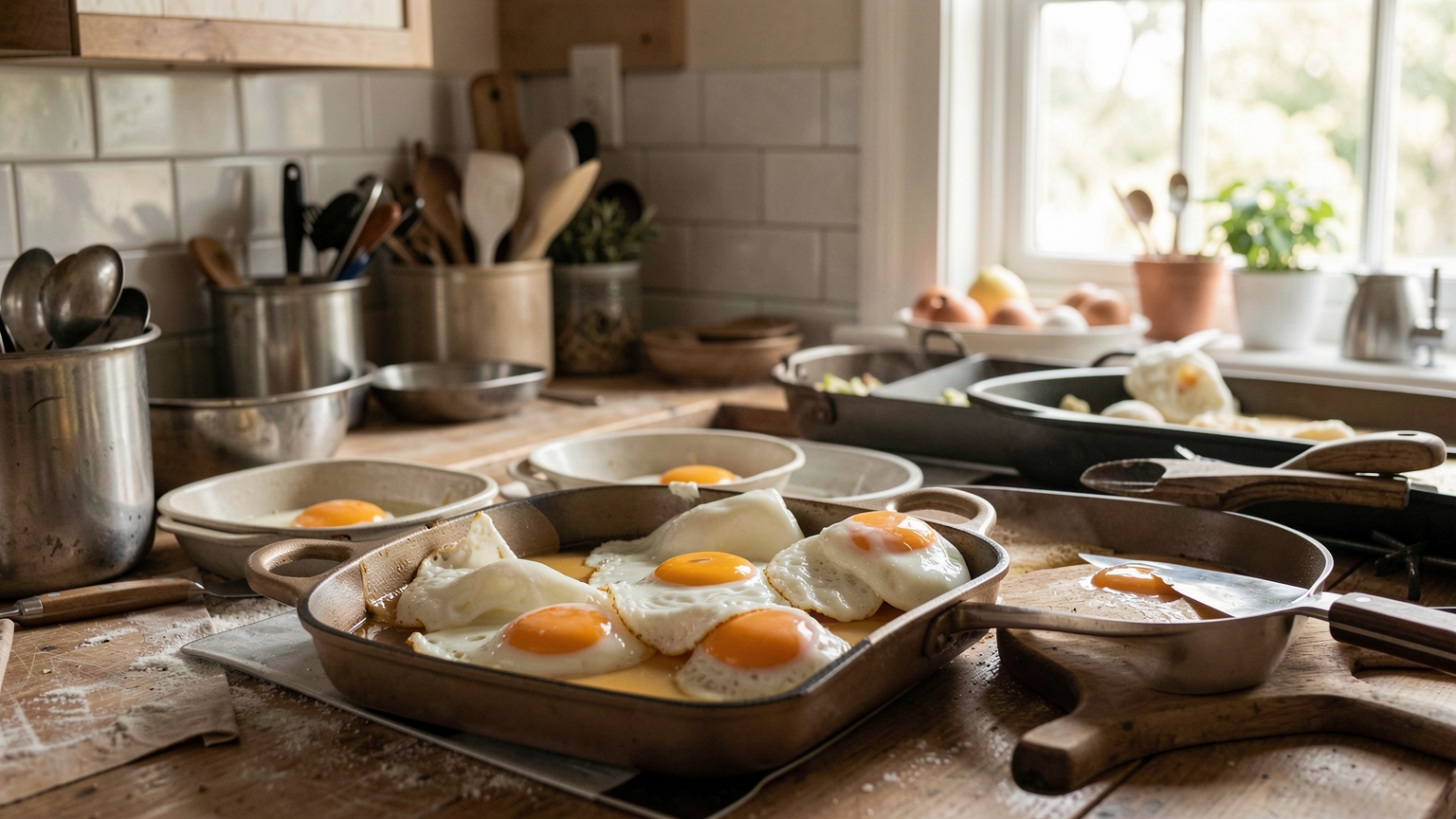
Eggs are the most versatile protein in the kitchen. The difference between rubbery and perfect is only a few minutes and a few degrees. Once you understand how heat and time affect texture, you can choose the exact style you want every time.
Soft scrambled eggs
Soft scramble is all about low heat. Whisk the eggs with a pinch of salt. Melt a small amount of butter over low heat, pour in the eggs, and stir gently with a spatula. Pull the eggs off the heat while they are still glossy and slightly loose. The carryover heat will finish them.
Classic scrambled eggs
For a firmer scramble, use medium heat and stir less frequently. Let small curds form, then fold them gently. Add a splash of milk or cream if you like a softer texture, but it is optional.
Fried eggs (sunny-side or over-easy)
Heat a nonstick or well-seasoned pan over medium heat, add oil or butter, and crack in the eggs. For sunny-side, cover the pan for a minute to set the top without flipping. For over-easy, flip gently once the whites are set, then cook for another 20 to 30 seconds.
Poached eggs
Poaching is about gentle simmering. Bring a pot of water to a low simmer and add a splash of vinegar. Swirl the water, then slide in the egg. Cook for about 3 minutes for a runny yolk. Remove with a slotted spoon and pat dry.
How freshness changes results
Fresher eggs have tighter whites, which makes poaching and frying easier. Older eggs have looser whites that spread more. For poaching, use the freshest eggs you have. For hard-boiled eggs, slightly older eggs can be easier to peel.
Room temperature eggs cook more evenly
If you have a few minutes, let eggs sit at room temperature before cooking. Cold eggs lower the pan temperature and can cause uneven cooking. Room temperature eggs are especially helpful for scrambled eggs and omelets.
Soft-boiled eggs
For a jammy center, lower eggs into boiling water and cook for about 7 minutes. Transfer to ice water to stop cooking. Peel under running water for easier removal.
Omelets and folded eggs
For a tender omelet, use medium-low heat and minimal stirring. Once the eggs set around the edges, add your fillings and fold gently. A soft omelet should be just set, not browned. If you want color, increase the heat slightly but keep the eggs moving so they do not dry out.
Baked eggs and shakshuka
Baked eggs are a hands-off option for brunch or dinner. Crack eggs into a lightly oiled dish with vegetables or tomato sauce, then bake at 375 degrees until the whites are set and the yolks are still soft. For shakshuka, simmer the sauce on the stove first, then add eggs and finish in the oven so they cook gently without curdling.
Hard-boiled eggs
Boil for 10 to 11 minutes, then chill immediately. The ice bath prevents the green ring around the yolk and makes peeling easier.
Crispy fried eggs
If you like lacy edges, use a slightly higher heat and enough oil to shimmer. Tilt the pan and spoon the hot oil over the whites. This method cooks the top without flipping and creates a crisp, golden edge while keeping the yolk runny.
Storing and reheating eggs
Cooked eggs keep well in the fridge for three to four days. Hard-boiled eggs are the most forgiving and can be eaten cold or warmed in hot water for a minute. Scrambled eggs reheat best on low heat with a splash of milk to prevent drying.
Texture troubleshooting
If scrambled eggs are rubbery, the heat was too high or the eggs were cooked too long. If poached eggs look ragged, the water was boiling too aggressively. If boiled eggs have a green ring, they were cooked too long or not cooled quickly enough.
Egg safety and storage
Keep eggs refrigerated and use them before the expiration date. Cooked eggs should be stored in the fridge and eaten within four days. If you are serving eggs to a crowd, keep hot eggs above 140 degrees and cold eggs below 40 degrees for food safety.
Salt timing for eggs
For scrambled eggs, salting before cooking is fine and helps the eggs stay tender. For fried eggs, add salt at the end to avoid drawing moisture onto the surface. Small timing choices like this improve texture without extra effort.
Make-ahead egg bites
For quick breakfasts, whisk eggs with a splash of milk, add diced vegetables or cheese, and bake in a greased muffin tin at 350 degrees for 15 to 18 minutes. Let them cool, then store in the fridge. Reheat gently in the microwave to avoid drying.
Seasoning ideas
Eggs pair well with herbs, chili flakes, and a touch of grated cheese. A few drops of hot sauce or a spoonful of pesto can change the flavor without changing the method.
Use fresh cracked pepper
Fresh pepper adds a clean bite that pairs well with eggs, especially soft scrambles and poached eggs.
Related articles
- Salt Smarter: Seasoning Stages for Better Flavor
- How to Read a Recipe Like a Pro: Timing, Mise en Place, and Heat Cues
FAQ
How do I get creamy scrambled eggs?
Use low heat, stir slowly, and pull the eggs off the heat while they still look slightly wet.
What is the timing for jammy boiled eggs?
Boil for about 7 minutes, then chill in ice water to stop cooking.
Why do fried eggs stick?
A pan that is not hot enough or not well-oiled will cause sticking. Heat the pan first, then add oil.
Conclusion
Eggs reward attention. Use gentle heat, watch the clock, and stop cooking before the eggs look fully done. The carryover heat does the rest, and your eggs stay tender.