
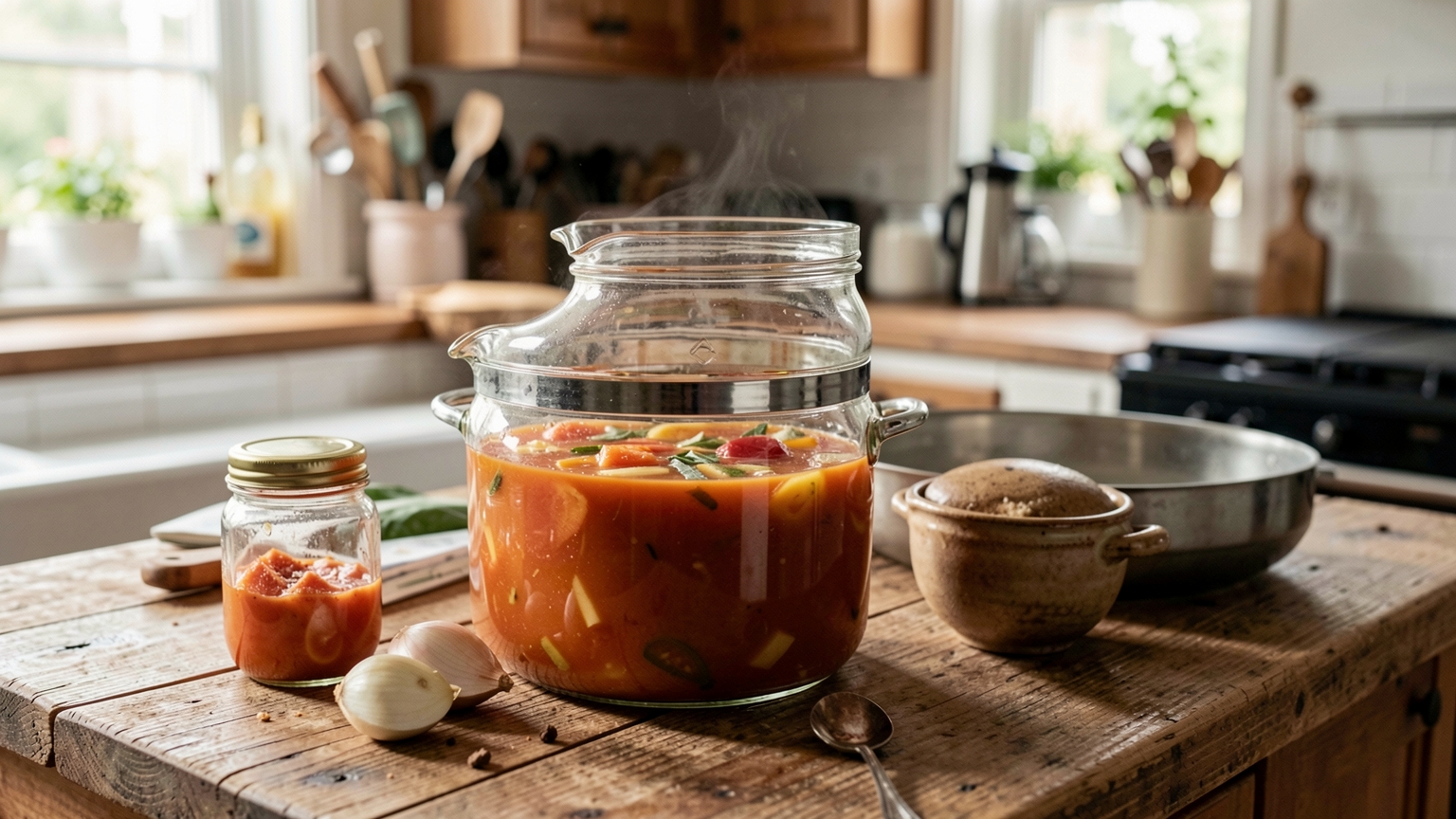
Homemade stock turns simple soups and sauces into something richer and more balanced. The process is slow, but the active work is minimal. The main challenge is keeping the stock clear and flavorful without bitterness.
What makes stock cloudy?
Cloudiness usually comes from boiling too hard or stirring. When proteins are agitated at high heat, they break apart and cloud the liquid. A gentle simmer keeps those proteins in larger pieces that can be skimmed.
Chicken stock basics
Use bones with some meat attached for flavor. Cover with cold water, bring to a gentle simmer, and skim the foam. Add onion, carrot, celery, and herbs after the first skim to keep the broth clean. Simmer for 2 to 4 hours, strain, and cool quickly.
When to add herbs and spices
Delicate herbs like parsley or dill lose flavor if cooked too long. Add them in the last 30 minutes. Hardy herbs like thyme and bay can go in earlier. Peppercorns are best used sparingly so they do not overpower the stock.
Blanching for extra clarity
If you want very clear stock, blanch the bones first. Cover them with cold water, bring to a boil for a few minutes, then drain and rinse. This removes impurities that cloud the stock. It is an extra step but makes a noticeable difference, especially for chicken stock.
Beef stock basics
Roast the bones first for deeper flavor. Beef stock benefits from a longer simmer, usually 6 to 8 hours, but keep the heat low. Skim regularly to keep the stock clear. Add vegetables in the last few hours so they do not disintegrate.
Vegetable stock basics
Vegetable stock is faster. Use aromatics, mushrooms, and herbs for depth. Simmer for 45 to 60 minutes; longer can make it bitter. Avoid too many cruciferous vegetables like cabbage or broccoli, which can overpower the flavor.
Using kitchen scraps wisely
Freeze onion skins, carrot ends, celery leaves, and herb stems in a bag. When it is full, use it for stock. Avoid bitter scraps like citrus peels or wilted brassicas. The goal is clean, sweet vegetable flavor.
Skimming and clarity
Skim the foam that rises during the first 30 minutes. This foam is made of proteins and impurities that can cloud the stock. A fine-mesh skimmer works best, but a spoon works too.
Gelatin and body
Good stock should feel lightly gelatinous when chilled. This comes from collagen in the bones. If your stock is thin, you may need more bones or a longer gentle simmer. Avoid a rolling boil, which breaks down the gelatin and clouds the stock.
Seasoning stock vs soup
Keep stock lightly salted or unsalted. Stocks are often reduced in sauces, so salting heavily at the stock stage can lead to an overly salty final dish. Adjust seasoning once the stock becomes the soup or sauce.
Pressure cooker shortcut
If you are short on time, a pressure cooker can produce a good stock in about an hour for chicken and two hours for beef. The flavor is slightly different but still rich. Use natural release so the liquid does not turn cloudy from rapid boiling.
Cooling and storage
Cool stock quickly by placing the pot in an ice bath, then store in the fridge or freezer. Strain through a fine-mesh sieve to remove solids. For freezer storage, portion into containers or freezer bags so you can thaw only what you need.
Using the fat cap
Once chilled, the fat rises to the top. You can remove it and save it for cooking, or leave a thin layer to protect the stock in the fridge. This fat adds flavor to soups, roasted vegetables, and pan sauces.
Straining for a clean finish
For the clearest stock, strain through a fine-mesh sieve lined with cheesecloth. Do not press the solids, which can push impurities back into the liquid. Let it drip naturally for a clean, clear stock.
Using stock in sauces
Stock is the base for pan sauces, gravies, and reductions. When you reduce stock, flavors intensify, so taste as you go. A splash of stock can also rescue a sauce that is too thick or salty.
Portioning for convenience
Freeze stock in multiple sizes: 1-cup portions for sauces and 2-cup portions for soups. Silicone molds or muffin tins are great for creating small stock blocks. Once frozen, store the blocks in a freezer bag so you can pull out exactly what you need.
Label and date
Write the date on each container. Stock keeps about four days in the fridge and up to three months in the freezer. Labels prevent freezer mystery containers and help you rotate older stock first.
Skim with patience
Skim a little at a time rather than trying to remove everything at once. Gentle skimming keeps the surface clean and avoids stirring up particles that make the stock cloudy.
Avoid over-salting early
Salt becomes more concentrated as the stock reduces. Keep it light during cooking and adjust later.
A pinch of salt at the end can bring out the natural sweetness without overpowering the stock.
When in doubt, taste and adjust slowly.
Related articles
- Soup Building 101: Layering Flavor with Mirepoix and Aromatics
- Why Your Pan Sauce Breaks and How to Fix It
FAQ
Why is my stock cloudy?
Cloudiness comes from boiling too hard or stirring. Keep stock at a gentle simmer and skim impurities.
How long should I simmer chicken stock?
For chicken stock, 2 to 4 hours is usually enough. Longer can make it bitter.
Can I freeze homemade stock?
Yes. Cool it quickly, portion it, and freeze for up to 3 months for best quality.
Conclusion
Clear stock is about patience and gentle heat. Skim early, simmer low, and cool quickly. Once you do it a few times, homemade stock becomes a simple habit that upgrades every soup and sauce you make.