
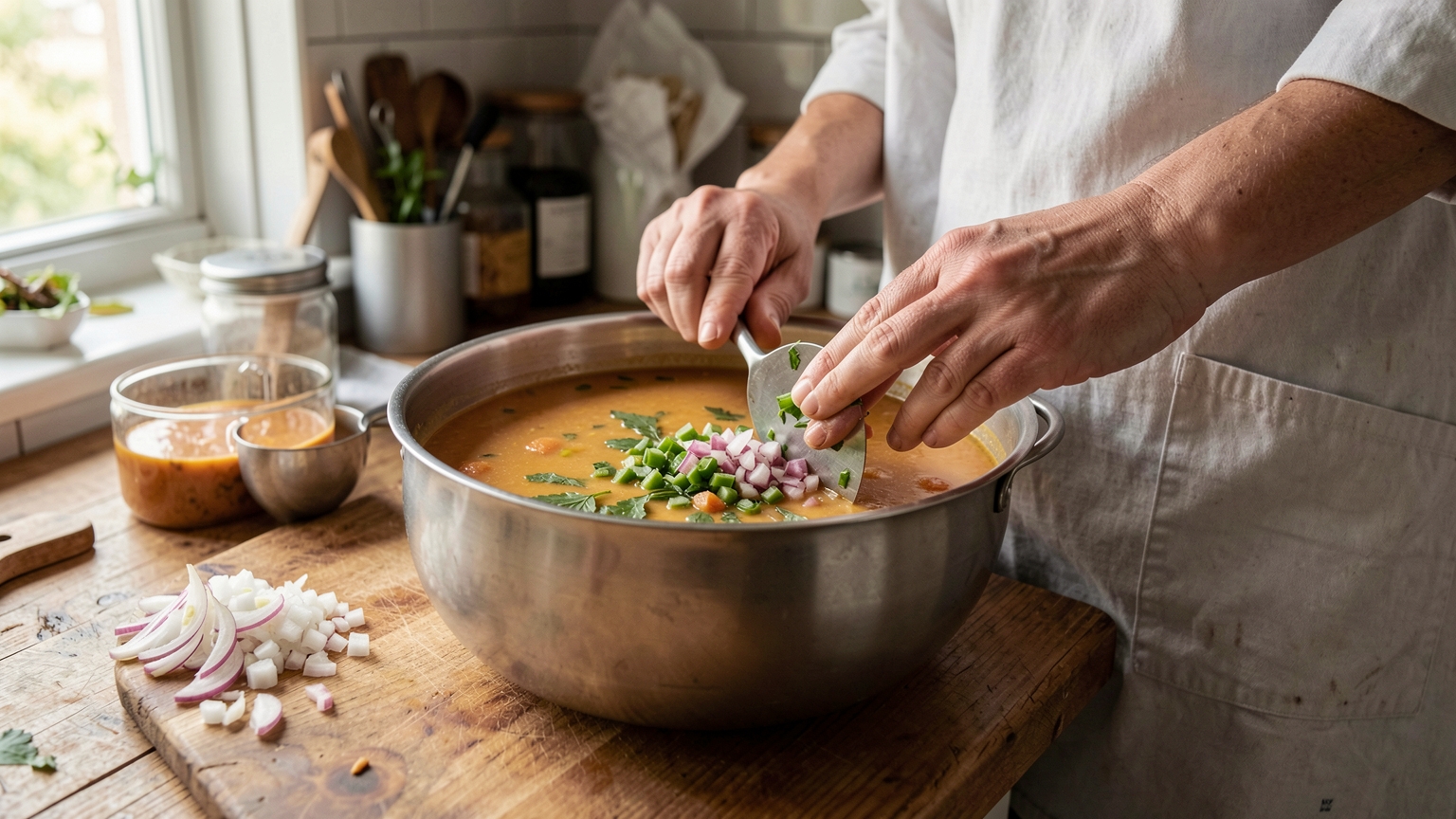
Great soup is not about a secret ingredient. It is about layering flavor at the right time. If your soup tastes flat, it usually means the foundation was rushed. A few minutes of careful sauteing and thoughtful seasoning can turn simple ingredients into a bowl that feels rich and complete.
Mirepoix: the foundation
Mirepoix is a classic base of onion, carrot, and celery. The standard ratio is 2 parts onion to 1 part carrot and 1 part celery. The onions provide sweetness, the carrots bring gentle earthiness, and the celery adds a savory note.
Dice everything evenly and cook slowly in oil or butter until soft and fragrant. The goal is gentle sweetness, not browning. This step can take 8 to 10 minutes, but it builds the backbone of the soup.
Aromatics build complexity
After the mirepoix softens, add aromatics like garlic, ginger, or herbs. Aromatics burn quickly, so add them after the base vegetables have softened. Cook just until fragrant. This stage adds depth and complexity without harshness.
Deglaze for extra flavor
If there is any fond on the bottom of the pot, deglaze with a splash of wine, stock, or water. Scrape up the browned bits with a wooden spoon. Those bits are concentrated flavor and become part of the soup.
Choose your liquid wisely
Stock adds richness, but water can work too if the base is flavorful. For lighter soups, water keeps flavors clean. For heartier soups, stock provides body. Use low-sodium stock if possible so you can control the salt levels.
Stock vs broth
Stock is made mostly from bones and has more body from gelatin. Broth is made with more meat and can taste lighter. Either works in soup, but stock gives a richer mouthfeel. If your soup feels thin, use stock or add a small amount of gelatin-rich ingredients.
Fat matters in soup
Fat carries flavor. A tablespoon of olive oil, butter, or rendered fat at the start helps aromatics bloom. If a soup tastes thin, a small drizzle of olive oil or a spoonful of yogurt at the end can add richness without making it heavy.
Add ingredients in the right order
Dense vegetables like potatoes or carrots need more time than leafy greens. Add long-cooking ingredients first, then add quick-cooking ones later. This prevents mushy greens and undercooked roots.
Season in stages
Salt should be added in small amounts throughout cooking, not all at the end. This helps each ingredient absorb seasoning. Taste the soup as it simmers and adjust gradually.
Simmer, do not boil
Boiling can break down vegetables and make soup cloudy. A gentle simmer keeps flavors clean and preserves texture. If the soup is bubbling aggressively, lower the heat and keep a lid slightly ajar to control evaporation.
Finish with brightness
Many soups taste flat because they are missing acid. A splash of lemon juice, vinegar, or a spoonful of tomato paste can lift the whole bowl. Add acid at the end so it stays bright.
Blending and texture control
If you want a creamy soup without cream, blend a portion of the soup and stir it back in. This thickens naturally and keeps the flavor clean. Use an immersion blender for control or a stand blender in batches. Always vent hot soup so steam can escape safely.
Thickening without heaviness
For a heartier soup, add cooked beans, lentils, or a handful of grains. These ingredients add body without turning the soup into stew. A small spoonful of mashed potato also works as a gentle thickener.
Finish with texture
Crunchy toppings add contrast and make soup feel more complete. Try toasted bread, roasted nuts, or a drizzle of herb oil. These small touches add aroma and texture without complicating the recipe.
Easy acid options
Keep a few acids ready: lemon juice for bright soups, vinegar for bean soups, and yogurt for creamy soups. A teaspoon at the end can lift the entire pot without making it taste sour.
Use herb stems
Herb stems carry plenty of flavor. Tie them in a small bundle and simmer them with the soup, then remove before serving. It is an easy way to use the whole bunch.
Keep it covered
A partially covered pot balances evaporation and prevents the soup from reducing too quickly.
If the soup looks too thick, add a splash of hot water and re-season.
Warm bowls keep soup hot longer and improve the experience.
This small step makes simple soups feel restaurant-ready.
Storage and reheating
Soups often taste better the next day because flavors meld. Cool soup quickly and store it in the fridge for up to four days. Reheat gently to avoid breaking dairy-based soups, and adjust seasoning after reheating since salt perception changes when the soup is hot again.
Texture matters
Consider how much texture you want. For a smooth soup, blend it and add a little cream. For a chunky soup, keep the vegetables intact and add grains or beans for body.
Related articles
- Homemade Stock: Chicken, Beef, and Vegetable, Without Cloudiness
- Salt Smarter: Seasoning Stages for Better Flavor
FAQ
What is mirepoix?
Mirepoix is a classic mix of onion, carrot, and celery used as the flavor base for soups and sauces.
Why does my soup taste flat?
Soups often taste flat when they lack salt, acidity, or layered aromatics. Add salt in stages and finish with a splash of acid.
Can I make soup without stock?
Yes. Water plus aromatics, vegetables, and a little fat can still make a flavorful soup.
Conclusion
Soup is a sequence of small, smart steps. Build a gentle base, add aromatics, and season in layers. Finish with a bright note, and your soup will taste like it simmered all day even if it did not.