
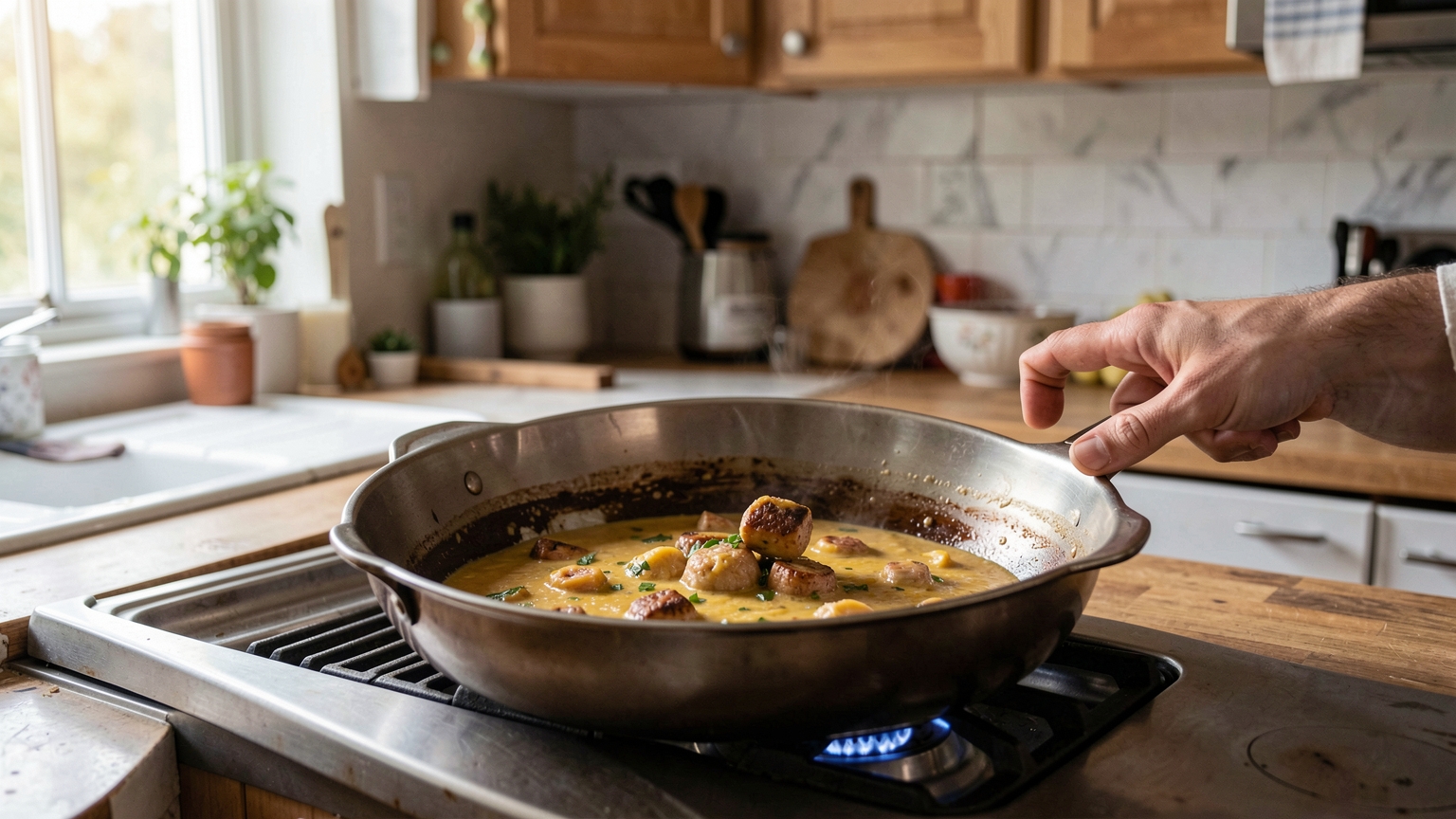
A good pan sauce is one of the fastest ways to turn a simple protein into a restaurant-level meal. But pan sauces can be fragile. One minute you have a glossy, silky sauce, and the next it turns oily or grainy. That is called a broken sauce, and it happens for a few specific reasons.
The good news is that broken sauces are usually fixable. If you understand emulsions and a few heat controls, you can rescue most sauces in minutes.
What it means when a sauce breaks
Most pan sauces are emulsions, which means fat and water are suspended together into a smooth mixture. The emulsion can break if the fat separates from the liquid. You see it as oily pools, a greasy mouthfeel, or a grainy texture if dairy curdles.
Breaking is not a sign of failure; it is a sign that the sauce needs a gentler technique.
Common causes of broken pan sauce
Too much heat
High heat makes butter or cream separate. The fat melts and pulls away from the water. A pan sauce should be simmered gently, not boiled.
Adding fat too quickly
Butter should be added in small pieces, whisked in slowly. If you drop a large amount at once, it melts before it can emulsify.
Not enough liquid
Emulsions need a balance of fat and water. If you reduce the sauce too far, the ratio tips toward fat and the emulsion collapses.
Acid plus dairy
Wine, lemon, or vinegar can curdle cream if added in large amounts or if the heat is too high. The proteins tighten and separate.
How to prevent a sauce from breaking
Start with moderate heat and keep it at a gentle simmer. After deglazing with wine or stock, let the liquid reduce slightly, then lower the heat before whisking in butter or cream. If the pan is too hot, pull it off the heat for a minute before finishing the sauce.
Use cold butter. The temperature difference helps the emulsion form gradually. Small cubes melt at the right speed and create a glossy texture.
How to fix a broken pan sauce
Method 1: Add a splash of warm liquid
Lower the heat, then whisk in a tablespoon of warm water or stock. This adds moisture and gives the emulsion something to grab. If the sauce starts to come back together, add cold butter slowly to stabilize it.
Method 2: Start a new base
In a clean bowl, whisk a teaspoon of warm water with a new piece of cold butter, then slowly whisk in the broken sauce. It is the same technique as fixing a broken hollandaise. It works because you are rebuilding the emulsion from scratch.
Method 3: Use a quick binder
A tiny pinch of mustard or a small spoonful of cream can help bind. Mustard has natural emulsifiers, and cream adds protein that can stabilize the sauce. Use this sparingly so you do not change the flavor too much.
Pan sauce structure that rarely fails
Here is a stable pattern I use at home: sear the protein, remove it, pour off excess fat, saute aromatics, deglaze with wine or stock, reduce by half, lower heat, then whisk in cold butter in small pieces. Add acid at the end. This method protects the emulsion at every step.
Why emulsions behave the way they do
Fat and water do not want to mix. An emulsion forms when tiny droplets of fat are suspended in water. Whisking helps, but temperature matters too. If the liquid is too hot, the fat separates. If the liquid is too cold, the butter will not melt smoothly. A gentle simmer is the sweet spot.
Choosing the right pan
Stainless steel is ideal because it develops fond, which flavors the sauce. Nonstick pans do not create as much fond, so the sauce can taste flatter. If you use nonstick, focus on aromatics and a good stock to build flavor.
Quick rescue checklist
When a sauce starts to look oily, turn off the heat, add a spoonful of warm water, and whisk. If it still looks broken, move it to a cooler bowl and whisk in a cube of cold butter. The key is to slow down and give the emulsion time to rebuild.
Salt at the end
Pan sauces reduce quickly, so salt can concentrate fast. Taste at the very end and add small pinches to avoid over-seasoning.
Real kitchen example
When I make a lemon pan sauce for chicken, I deglaze with a splash of white wine, then add stock and reduce. I pull the pan off the heat before whisking in butter, and I add lemon juice at the very end. If I add the lemon earlier, the sauce can split when the butter goes in. Timing matters.
Related articles
- Searing Steak on the Stovetop: Thick Cuts, Smoke Control, Resting
- Homemade Stock: Chicken, Beef, and Vegetable, Without Cloudiness
FAQ
What does it mean when a sauce breaks?
A broken sauce means the fat and liquid separated, resulting in a greasy or curdled texture instead of a smooth emulsion.
How do I fix a broken pan sauce?
Lower the heat and whisk in a small splash of water or stock, then add cold butter slowly to rebuild the emulsion.
Why does cream sauce curdle?
High heat and acidic ingredients can cause dairy proteins to tighten and separate. Reduce heat and add acid at the end.
Conclusion
Pan sauces are quick, but they are delicate. Keep the heat gentle, add fat slowly, and balance the liquid. Even if a sauce breaks, you can bring it back with a little patience and a cool head.