
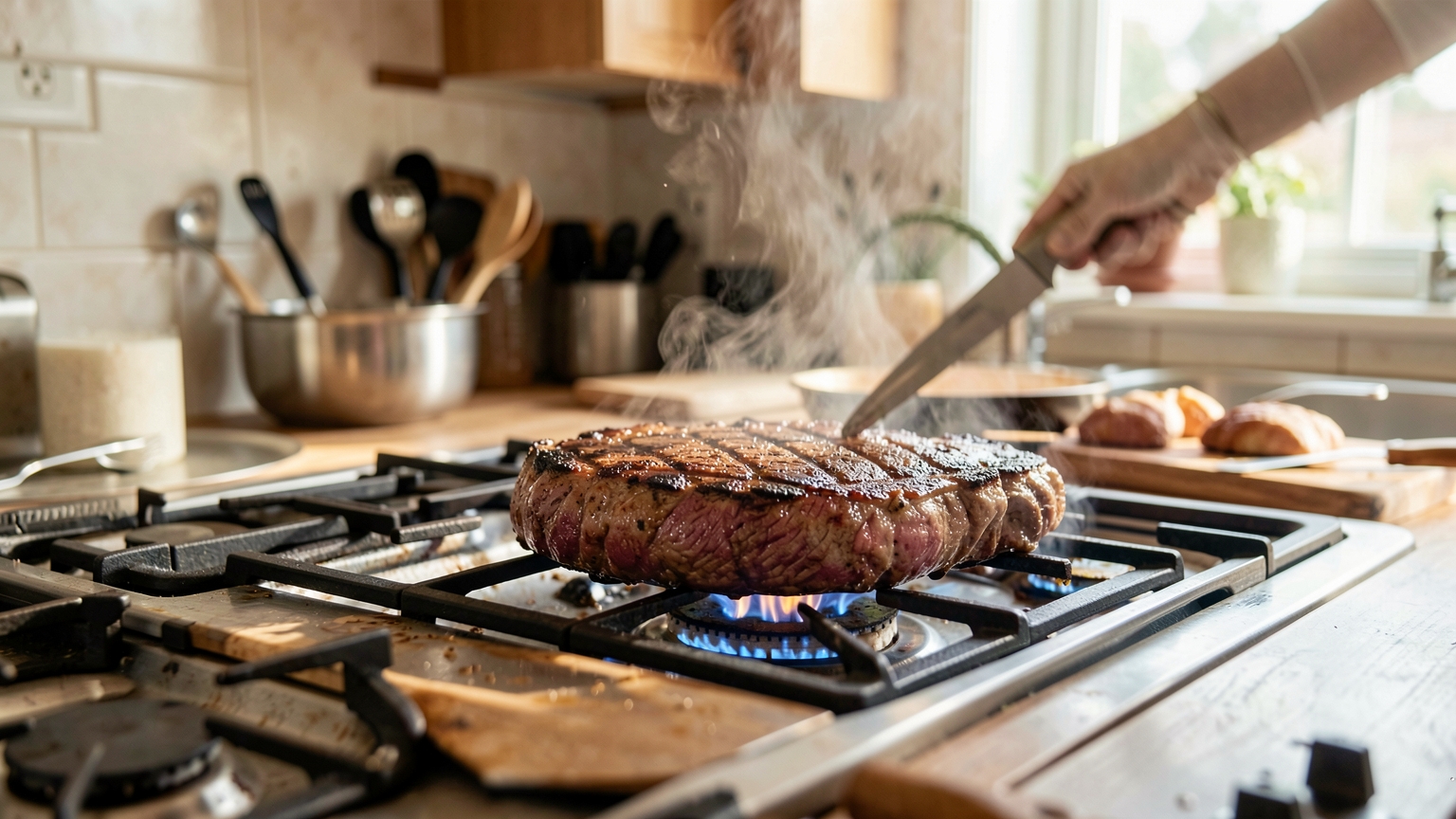
A great stovetop steak has two qualities: a deep brown crust and a juicy, evenly cooked center. The method is straightforward, but the details matter. Pan choice, heat management, and resting time can turn a good steak into a great one.
Choose the right cut and thickness
Thicker steaks cook more evenly because you have time to build a crust without overcooking the center. Aim for 1 to 1.5 inches thick. Ribeye and strip steak are forgiving because they have enough fat to stay juicy.
Dry the surface for better browning
Moisture is the enemy of a good sear. Pat the steak dry with paper towels. If you have time, salt it and let it sit uncovered in the fridge for an hour. This dries the surface and seasons the meat more deeply.
Salting strategy
If you salt right before cooking, the surface stays dry and the crust forms quickly. If you salt 45 to 60 minutes early, the salt draws out moisture then reabsorbs, seasoning the steak deeper. Avoid salting 5 to 15 minutes before cooking, when moisture sits on the surface and delays browning.
Pick the right pan
Cast iron is the classic choice because it holds heat and creates a strong crust. Stainless steel works too if it is heavy and well-heated. Avoid thin nonstick pans, which do not handle high heat well and can limit browning.
Reverse sear for very thick cuts
For steaks thicker than 1.5 inches, a reverse sear is more reliable. Bake the steak at 250 to 275 degrees until it is 10 to 15 degrees below target, then sear quickly in a hot pan. This gives a deep crust without overcooking the center.
Heat management and smoke control
Use a high smoke point oil such as avocado or grapeseed. Heat the pan until the oil shimmers, then add the steak. If the oil smokes immediately, reduce the heat slightly. You want steady heat, not a blazing pan that burns the crust before the inside cooks.
For thick cuts, consider a two-step method: sear on high heat for a crust, then reduce to medium and finish gently. You can also finish in a low oven if the steak is very thick.
Thermometer placement
Insert the thermometer from the side into the thickest part of the steak, away from fat pockets. This gives a more accurate reading. A thin steak may not need a thermometer, but thicker cuts benefit from it.
Flip with intention
Let the steak cook undisturbed for a few minutes before flipping. If it sticks, it is not ready to release. When the crust forms, it will lift easily. Flip and repeat.
Butter basting for flavor
Near the end of cooking, add a tablespoon of butter and a smashed garlic clove to the pan. Tilt the pan and spoon the foamy butter over the steak. This adds flavor and helps the surface cook evenly. Keep the heat moderate so the butter does not burn.
Resting is essential
Rest the steak for 5 to 10 minutes. This allows the juices to settle. If you slice too early, the juices run out and the steak feels dry. Resting is the simplest step that makes the biggest difference.
Rest on a rack if possible
Resting on a small rack or overturned chopsticks keeps the bottom from steaming. It preserves the crust you worked hard to build and keeps the steak evenly hot.
Use the fond for a quick pan sauce
After cooking, pour off excess fat, add a splash of stock or wine, and scrape up the browned bits. Reduce slightly and whisk in a small piece of butter. This quick sauce adds depth without extra effort.
Testing pan heat
To check heat, flick a few drops of water into the pan. If they sizzle and evaporate quickly, the pan is hot enough. If they sit and steam, wait longer.
Let the steak rest at room temperature briefly
Letting the steak sit for 15 to 20 minutes before cooking helps it cook more evenly. The center is less cold, so you can build a crust without overcooking the edges.
Pat dry right before cooking
Even if you salted early, a quick pat with paper towels removes surface moisture and improves browning.
This single step often makes the crust noticeably darker.
Dry surfaces brown faster and more evenly.
It is worth the extra 10 seconds.
Slicing for tenderness
Slice across the grain so the muscle fibers are shorter and easier to chew. This matters especially for cuts like flank or skirt steak. Even a perfectly cooked steak can feel tough if it is sliced the wrong way.
Doneness guide
Use a thermometer for accuracy. Medium rare is around 130 to 135 degrees, medium is 140 to 145 degrees, and medium well is 150 to 155 degrees. Remove the steak a few degrees early because carryover heat will raise the temperature as it rests.
Related articles
FAQ
What pan is best for searing steak?
A heavy cast iron or stainless steel pan holds heat best and produces a strong crust.
Why does my steak smoke so much?
High heat and excess oil can smoke quickly. Use a high smoke point oil and avoid too much fat in the pan.
How long should steak rest?
Rest steak for 5 to 10 minutes depending on thickness. This keeps juices from running out when you slice.
Conclusion
Great steak on the stovetop is a balance of heat and patience. Dry the surface, use a hot pan, and rest the meat. With practice, you will get a consistent crust and juicy center every time.