
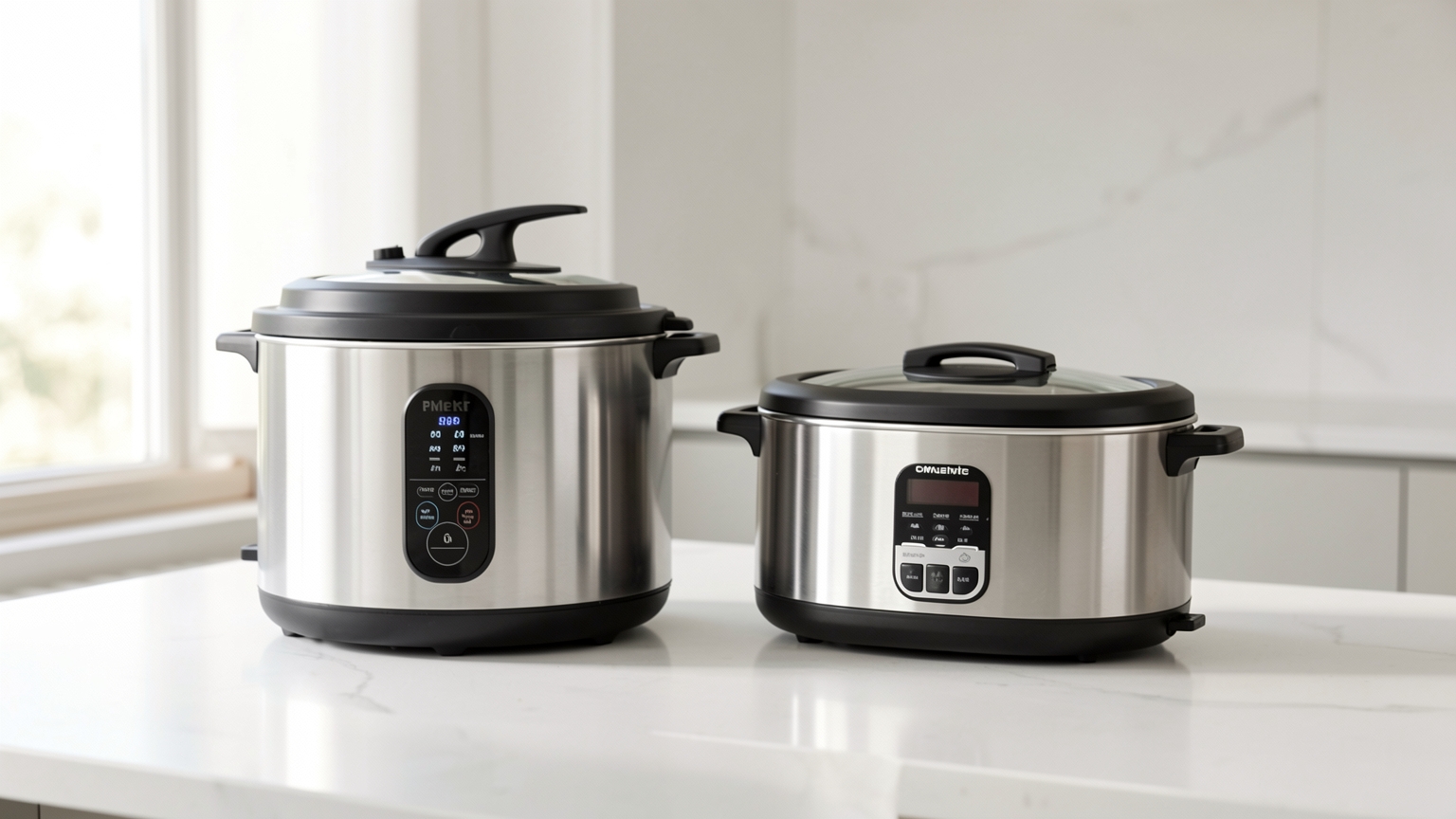
Pressure cookers and slow cookers both promise hands-off comfort food, but they behave very differently. A pressure cooker uses high pressure to raise the boiling point of water and speed up cooking. A slow cooker uses gentle heat over a long period, encouraging gradual tenderizing and flavor development.
When a pressure cooker shines
Pressure cookers are ideal when you want rich flavor quickly. Beans soften in under an hour, and tough cuts like chuck roast become tender in a fraction of the time. The high pressure also pushes liquid into the food, which can create a juicy texture.
Hands-on time vs total time
Pressure cookers are fast, but they still need time to build pressure and release it. Slow cookers take hours but require almost no attention after setup. Think about your day: if you can prep in the morning, a slow cooker is effortless; if you need dinner soon, pressure is your friend.
When a slow cooker shines
Slow cookers are best for set-it-and-forget-it meals. They are great for soups, stews, and shredded meats that benefit from long, gentle heat. The downside is that they do not brown food well, so you may need to sear or saute first for deeper flavor.
Layering matters in slow cookers
Place dense vegetables like carrots and potatoes on the bottom where heat is strongest. Place delicate ingredients on top so they cook gently. This prevents mushy vegetables and keeps the texture balanced.
Food safety basics
Slow cookers should bring food to a safe temperature within a few hours. Avoid starting with frozen meat in a slow cooker because it can stay in the temperature danger zone too long. Pressure cookers reach safe temperatures quickly, which makes them safer for large cuts when time is limited.
Vegetable timing tips
Pressure cookers can turn vegetables soft quickly, so add them at the end if you want texture. Slow cookers also soften vegetables over time, but you can keep them firmer by placing them on top and choosing a shorter cook time.
Cleaning and upkeep
Pressure cookers have silicone rings that absorb odors, so keep a spare ring for sweet dishes. Slow cookers are easy to clean, but avoid sudden temperature changes that can crack the ceramic insert.
Pressure release choices
Natural release lets pressure drop slowly and is best for soups, beans, and large cuts because it prevents liquid from sputtering. Quick release is useful for vegetables or delicate foods that can overcook. Knowing which release to use helps you control texture.
Energy and heat
Pressure cookers are more energy efficient because they cook quickly. Slow cookers use low power over a long time, which can still be efficient but depends on your schedule.
Flavor finishing tip
Both methods benefit from a final taste check. A small splash of acid, a bit more salt, or fresh herbs added right before serving can make the dish taste brighter and more complete.
Keep notes on cook times
Each appliance runs a little differently. Once you find a timing that works, jot it down so the next batch is effortless.
A small notebook or phone note saves time and prevents overcooking on repeat dishes.
These notes become your personal shortcut library.
Consistency builds confidence with each cook.
Choose the tool that fits your day, not just the recipe.
That choice keeps cooking sustainable.
Ease matters.
That is the real win.
Best dishes for each tool
Pressure cookers excel at beans, tough cuts, and grains like farro that normally take a long time. Slow cookers are great for chili, pulled pork, and stews that benefit from gradual flavor melding. If a recipe relies on browning and reduction, a pressure cooker needs extra steps, while a slow cooker may need a final simmer on the stove.
Texture differences
Pressure cookers can sometimes make textures soft all the way through, especially with vegetables. Slow cookers maintain structure better if you add delicate ingredients later. If you want defined chunks, slow cooker timing is easier to control.
Liquid requirements
Pressure cookers require a minimum amount of liquid to build pressure, usually at least 1 cup. Slow cookers do not evaporate much, so you often need less liquid than stovetop recipes. Adjusting liquid prevents watery results.
Flavor development
Slow cookers create gradual flavor melding. Pressure cookers are faster but can taste slightly less layered unless you use techniques like sauteing first and reducing the cooking liquid afterward.
Finishing moves that improve flavor
For pressure cookers, reduce the cooking liquid on the saute setting to concentrate flavor. For slow cookers, remove the lid for the last 20 minutes to thicken the sauce. A final splash of acid and fresh herbs brightens both methods.
Safety and convenience
Modern pressure cookers are safe, but they require attention to sealing and pressure release. Slow cookers are simpler and easier to leave unattended, which is why they are popular for busy days.
Related articles
- Homemade Stock: Chicken, Beef, and Vegetable, Without Cloudiness
- Soup Building 101: Layering Flavor with Mirepoix and Aromatics
FAQ
Which cooker is better for tough cuts?
Both work, but a pressure cooker breaks down collagen quickly, while a slow cooker gives a deeper braised flavor.
Can I use a pressure cooker like a slow cooker?
Some multi-cookers have a slow cook setting, but it often runs hotter than a traditional slow cooker.
Which is better for meal prep?
Pressure cookers are faster for weeknight meal prep, while slow cookers are convenient for hands-off cooking.
Conclusion
If you need speed, choose the pressure cooker. If you want hands-off slow braising, choose the slow cooker. Many kitchens benefit from having both, but understanding their strengths helps you pick the right tool for the dish.