
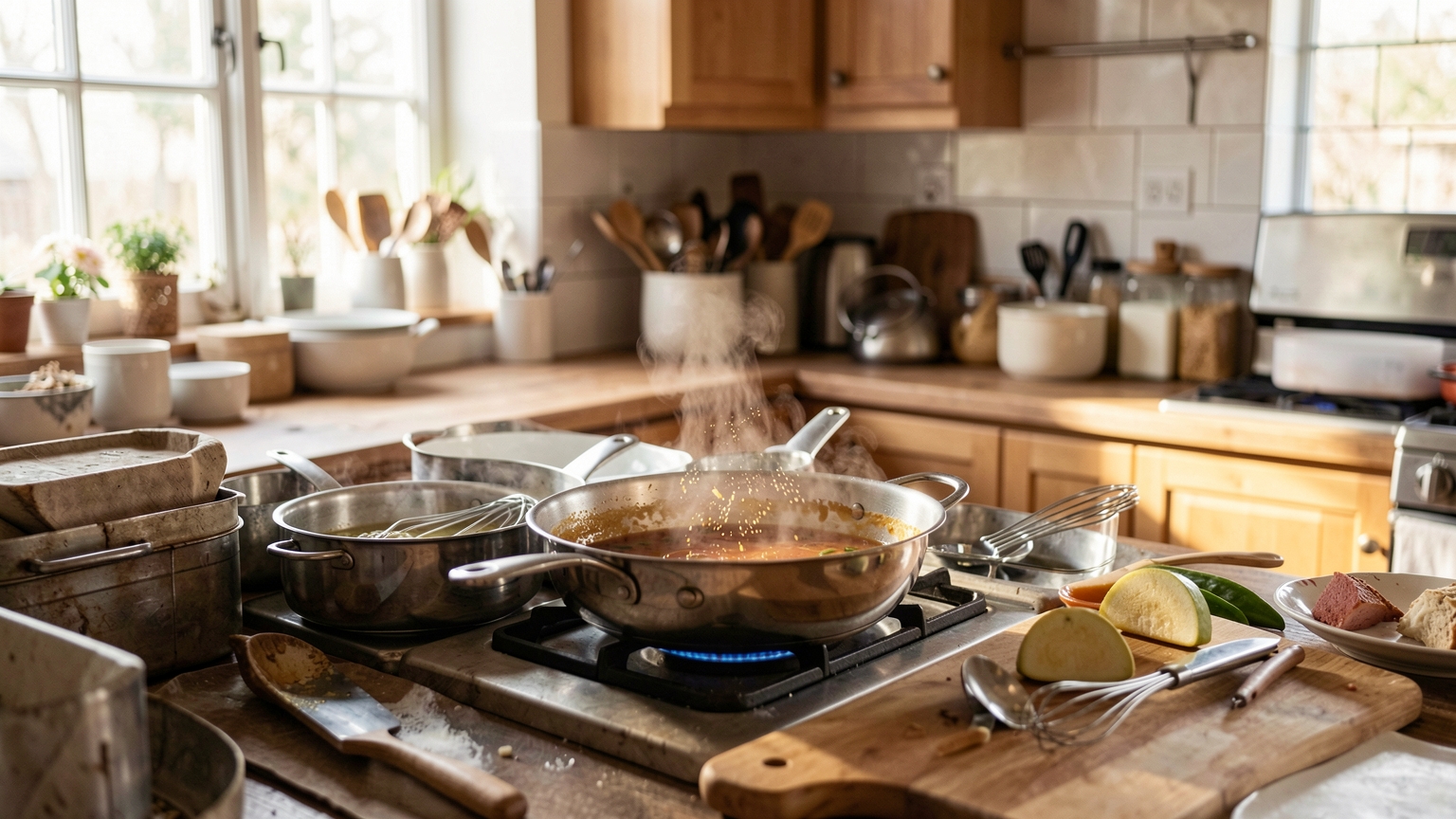
Thickening a sauce is one of those cooking skills that feels mysterious until you learn the basics. There are several methods, and each one is best for a different situation. Knowing the right choice prevents gummy textures and keeps flavors clean.
Roux: the classic base
A roux is equal parts fat and flour cooked together. It thickens sauces smoothly and is perfect for gravy, bechamel, and creamy soups. The color of the roux matters: white roux thickens the most, while darker roux adds flavor but thickens less.
Roux color guide
White roux cooks for 2 to 3 minutes and tastes neutral. Blond roux develops a toasty aroma and works well for gravy. Brown roux is cooked longer for deep, nutty flavor, but it thickens less. Choose the color based on the flavor you want, not just thickness.
Slurry: fast and flexible
A cornstarch or arrowroot slurry thickens quickly. Mix the starch with cold water, then whisk it into a simmering sauce. It thickens in seconds and is ideal for stir-fry sauces or quick gravies.
Avoiding lumps
For roux-based sauces, whisk constantly as you add liquid and make sure the liquid is warm. For slurries, always mix the starch with cold water first; adding dry starch directly to hot liquid creates clumps.
Reduction: flavor first
Reduction thickens by evaporating water. It concentrates flavor and creates a glossy texture without added starch. The downside is time. This method is best for pan sauces or wine reductions where flavor intensity matters.
Gluten-free options
If you need a gluten-free thickener, use cornstarch, arrowroot, or tapioca starch. Arrowroot stays clear and glossy but can become stringy if overcooked. Tapioca adds a slightly chewy texture, which works well in fruit sauces.
How thickening behaves after reheating
Cornstarch-thickened sauces can thin out after refrigeration and reheating. Roux-based sauces stay more stable. If a sauce loosens after reheating, whisk in a small amount of slurry and simmer briefly to restore the texture.
Beurre manie: a finishing move
Beurre manie is a paste of butter and flour kneaded together. Whisk small pieces into a simmering sauce to thicken without making a separate roux. It is a great rescue method when a sauce is too thin at the last minute.
How much thickener to use
As a rough guide, 1 tablespoon of cornstarch thickens about 1 cup of liquid to a medium consistency. For a roux, 1 tablespoon of flour and 1 tablespoon of butter thickens about 1 cup. Always add gradually and stop when the texture looks right.
Common thickening mistakes
Boiling a cream sauce too aggressively can cause it to split. Adding too much slurry at once can make the sauce gluey. Reduce heat, add thickener gradually, and whisk continuously for the smoothest result.
Cooking out starch flavor
Flour needs time to cook. A roux should bubble gently for a few minutes before you add liquid, and the sauce should simmer for at least 5 minutes to remove raw flour taste. Cornstarch thickens faster but can taste starchy if it is not heated long enough.
Thickening cold sauces
Cold sauces like mayonnaise or aioli are emulsified, not thickened with starch. If a cold sauce is too thin, add another yolk or a small amount of mustard to stabilize it. Heat-based thickeners do not work well in cold sauces.
If the sauce is too thick
Thin a sauce gradually with warm stock, milk, or water. Add small splashes and whisk until the texture loosens. If a roux-based sauce is too thick after resting, a gentle reheat with added liquid will restore its original consistency.
Texture and appearance
Roux-based sauces look creamy and opaque, while cornstarch slurries look glossy and translucent. Choose based on the style you want. A shiny stir-fry sauce usually needs slurry, while a gravy benefits from roux.
Freezing considerations
Cornstarch sauces can separate when frozen and thawed. Roux-based sauces hold up better. If you plan to freeze a sauce, use roux or reduce the sauce and thicken it after reheating.
Add slurry near the end
Slurries thicken quickly, so add them near the end of cooking. Simmer for a minute after adding to remove any starchy taste, then take the sauce off the heat. Overcooking can make the sauce thin again.
Strain for smoothness
If a sauce develops small lumps, pass it through a fine-mesh sieve. This quick step saves the texture without changing flavor.
Whisking tools
A flat whisk helps you reach the edges of the pan and keeps sauces smooth. It is a small tool that makes thickening much easier.
For small batches, a fork can work in a pinch.
Smooth sauces start with steady whisking.
Slow, even heat is your best friend.
Rushing is what causes most sauce problems.
A calm simmer fixes more than it breaks.
Give the sauce time to settle.
Patience is a key ingredient.
Let the sauce do the work.
Choosing the right method
If you want a smooth, creamy base, use a roux. If you need speed, use a slurry. If you want intense flavor, reduce. If you want a quick fix at the end, reach for beurre manie.
Related articles
- Why Your Pan Sauce Breaks and How to Fix It
- Homemade Stock: Chicken, Beef, and Vegetable, Without Cloudiness
FAQ
What is the easiest way to thicken a sauce?
A cornstarch slurry is the quickest option and thickens almost instantly.
When should I use a roux?
Use a roux when you want a stable, creamy sauce such as gravy or bechamel.
How do I thicken a sauce without starch?
Reduce the sauce by simmering or finish with butter to add body.
Conclusion
Thickening is a tool, not a trick. Pick the method that suits your sauce and your timing. Once you understand the options, you can make sauces that feel polished and intentional.