
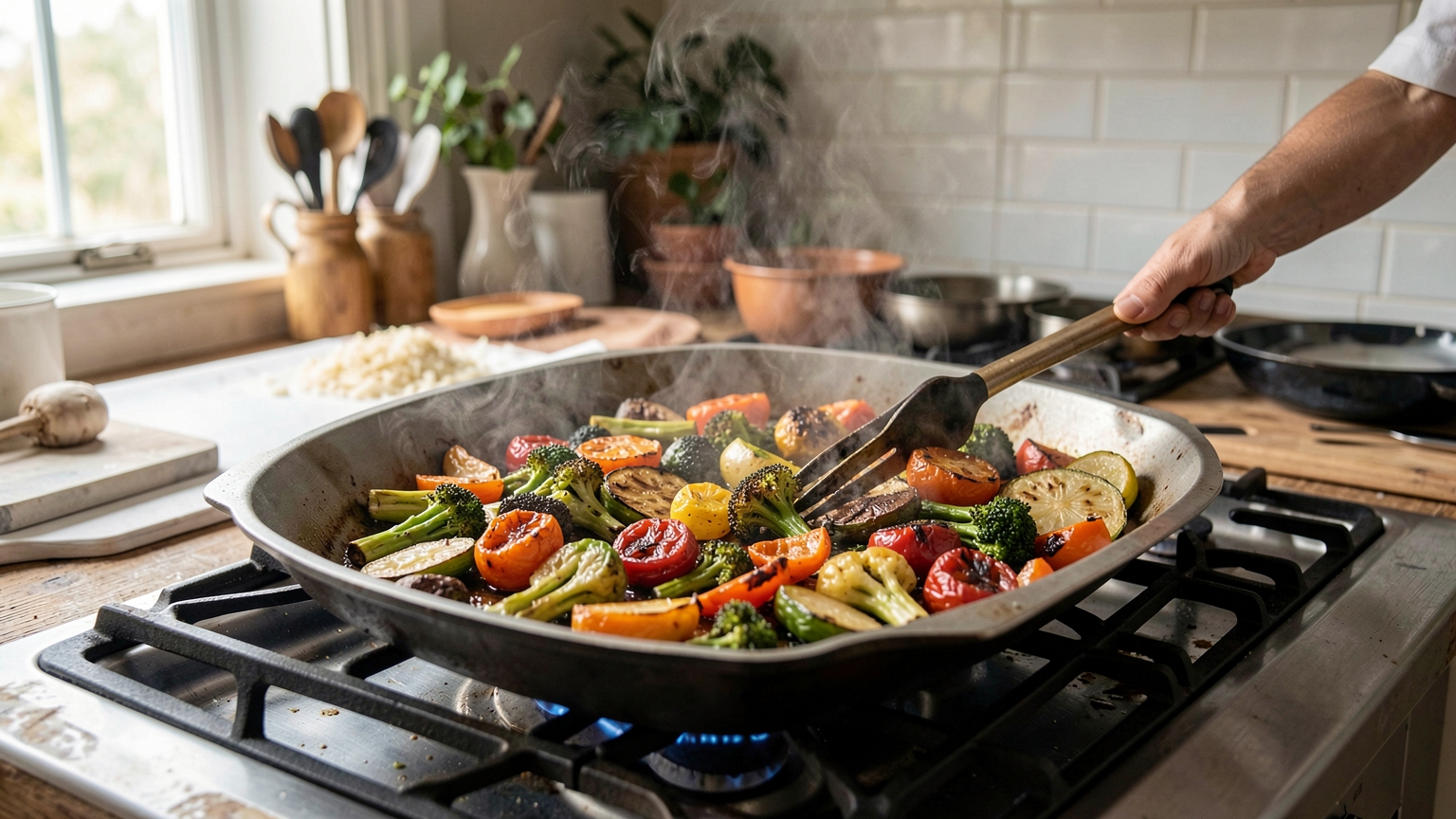
Roasted vegetables should taste sweet, nutty, and lightly crisp around the edges. If yours are soft and pale, the issue is usually moisture and heat management. Roasting is essentially a controlled dehydration process. Once you understand that, the fix becomes simple.
Dry surfaces are the first step
Water on the surface has to evaporate before browning can begin. If you wash vegetables, dry them thoroughly. Use a clean towel and let them air-dry for a few minutes. This small step speeds up caramelization and keeps the oven from steaming the vegetables.
Preheat the pan for extra browning
Preheating the sheet pan in the oven gives vegetables an immediate sizzle. The surface moisture evaporates faster and caramelization starts sooner. Carefully add the vegetables to the hot pan and spread quickly to avoid sticking.
Cut size controls texture
Smaller pieces cook faster and brown more, but they can also dry out. Larger pieces stay tender inside but need longer time. Aim for uniform cuts so everything finishes together. For mixed vegetables, group similar sizes or add them in stages.
Oil helps heat transfer
A light coating of oil helps the heat reach the surface evenly and promotes browning. Toss vegetables with just enough oil to lightly coat them. If oil pools on the pan, you used too much.
Choosing the right oil
Neutral oils like avocado, grapeseed, and canola handle high heat well. Olive oil adds flavor but can smoke at higher temperatures, so keep the oven closer to 425 degrees if you use it. For nutty flavor, add a drizzle of toasted sesame oil after roasting.
Temperature range for roasting
Most vegetables roast well at 425 degrees. Starchy vegetables like potatoes can handle 450 degrees for a deeper crust. Tender vegetables like asparagus or broccoli do well at 400 to 425 degrees so they do not burn before they soften.
Par-cooking for tough vegetables
Dense vegetables like carrots or potatoes benefit from a short parboil or microwave steam before roasting. This jump-starts the interior so the exterior can brown without leaving the center undercooked. Drain well and let steam dry off before roasting.
Spacing matters more than seasoning
Overcrowded pans trap steam. Use a large sheet pan or two pans for big batches. If you see liquid pooling in the pan, the vegetables are steaming rather than roasting.
Convection can help
If your oven has a convection setting, use it for roasting. The circulating air removes moisture faster and speeds up browning. Reduce the oven temperature by 25 degrees to prevent over-browning.
Timing strategies
Dense vegetables like carrots and Brussels sprouts need longer. Quick-cooking vegetables like zucchini or cherry tomatoes can go in later. A practical approach is to start with dense vegetables, then add tender ones halfway through.
Seasoning tips
Salt before roasting to draw out moisture, then finish with an acid like lemon or vinegar to brighten the flavor. Fresh herbs like parsley or basil should be added after roasting so they stay vibrant.
Salt timing for watery vegetables
Vegetables with high water content, such as zucchini and mushrooms, can release water quickly. If you salt them too early, they weep and steam. For these vegetables, salt lightly right before roasting and increase the heat to encourage evaporation.
Batching for large quantities
Large batches of vegetables will steam if they are stacked. Use two pans and rotate halfway through. This keeps the hot air moving and helps every piece brown evenly.
Finish with acid
A splash of vinegar or lemon juice right after roasting wakes up the flavor and balances the sweetness of caramelization. This is especially effective with Brussels sprouts, carrots, and cauliflower.
Use broil to deepen color
If vegetables are tender but still pale, a short broil can deepen color quickly. Keep the pan on the upper rack and watch closely for the last minute. This trick adds caramelization without overcooking the interior.
Stirring halfway through
Turn the vegetables once halfway through roasting. This exposes new surfaces to the hot pan and prevents sticking. Too much stirring slows browning, so one good flip is enough.
Use parchment wisely
Parchment makes cleanup easy, but it can slightly reduce browning. If you want the deepest color, roast directly on the pan or preheat the pan before adding parchment.
Either way, keep the vegetables in a single layer for best color.
Crowding is the fastest path to steaming instead of roasting.
Give each piece a little space to breathe.
That space is what lets steam escape and browning happen.
It is the simplest fix for soggy trays.
Space equals color.
Color equals flavor.
That is the roasting goal.
Example mix and timing
For a mixed pan of carrots, broccoli, and red onion, start the carrots alone at 425 degrees for 10 minutes, then add broccoli and onion and roast for another 12 to 15 minutes. This staggering helps everything finish together without soggy broccoli.
Flavor boosters that work
Sprinkle vegetables with a small amount of spice blend before roasting, such as smoked paprika for sweet potatoes or cumin for carrots. Finish with flaky salt, grated cheese, or toasted nuts after roasting for added texture and depth.
Related articles
- Sheet-Pan Dinners That Actually Brown: Heat, Space, and Timing
- Pantry Spice Organization That Improves Cooking
FAQ
Why do my roasted vegetables turn out soggy?
Overcrowding traps steam and prevents browning. Use a larger pan or two pans.
What temperature is best for roasting vegetables?
Most vegetables roast well at 425 degrees. Starchy vegetables can handle 450 degrees for deeper browning.
Should I oil vegetables before roasting?
Yes, a light coat of oil helps heat transfer and promotes caramelization.
Conclusion
Great roasted vegetables are all about managing moisture and heat. Dry the surface, roast hot, and give everything room. Those three habits deliver caramelized edges and deep flavor every time.